
 Kontakt
 Wie einkaufen
Versand
Kaufberater
 Englisch
 68 b
68 b
Bis zu 30 Tage Rückgaberecht
Kunden kauften auch

 /
/
 Broschur
 17.95
€
17.95
€





 /
Hardcover
17.69
€
/
Hardcover
17.69
€






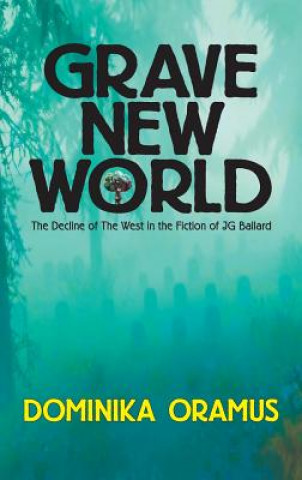
In this fascinating book Dr Dominika Oramus reads J.G. Ballard's fiction (and some of his non-fiction) as a record of the gradual internal degeneration of Western civilization in the second half of the twentieth century. In sundry ways and styles Ballard's ostensibly very heterogeneous oeuvre depicts the same intangible catastrophe that has happened to the world. Contemporary reality is thus presented in his late prose as "post-apocalyptic": though we are not literally living amidst the ruins, the golden age is far behind us and we are witnessing the twilight of the West. Oramus achieves two aims in this study. First, the revelation of the Grave New World, that imaginary territory Ballard describes in his books, which is a combination of the turn-of-the-millennium world, intertextual allusions to both fiction and non-fiction, and Ballard's projections for the near future with its sociological idiosyncrasies. Oramus shows that no matter which literary conventions Ballard applies in a given text (science fiction, speculative fiction, detective story, thriller, war novel, or any other), he charts the very same territory and remains throughout primarily interested in the reaction of the human mind to the post-World War II reality - which is the common denominator of his diverse obsessions. Second, she sheds light on the spiritual condition and social problems of contemporary Western civilization as seen by Ballard, its ever so inquisitive member. Her technique in approaching Ballard is that of textual analysis and a close readings of passages of his texts that best show his exuberant stylistics; sometimes she also points out his references to literary and cultural theories. As far as said theories are concerned, Oramus follows Ballard's own readings. He very often alludes to critical schools and makes his characters discuss fashionable notions and ideas. She refers to the same sources: mostly psychoanalysts (many Ballardian characters are psychiatrists), but also historians and recent cultural theorists.


Informationen zum Buch
Englisch

Verschenken Sie dieses Buch noch heute
Es ist ganz einfach
1 Legen Sie das Buch in Ihren Warenkorb und wählen Sie den Versand als Geschenk 2 Wir schicken Ihnen umgehend einen Gutschein 3 Das Buch wird an die Adresse des beschenkten Empfängers geliefertDas könnte Sie auch interessieren




















Hallo! Ich bin Libroamiko, dein Buchberater.
Wie kann ich dir helfen?