
 Kontakt
 Wie einkaufen
Versand
Kaufberater
State Erosion
 Englisch
 119 b
119 b
Kunden kauften auch











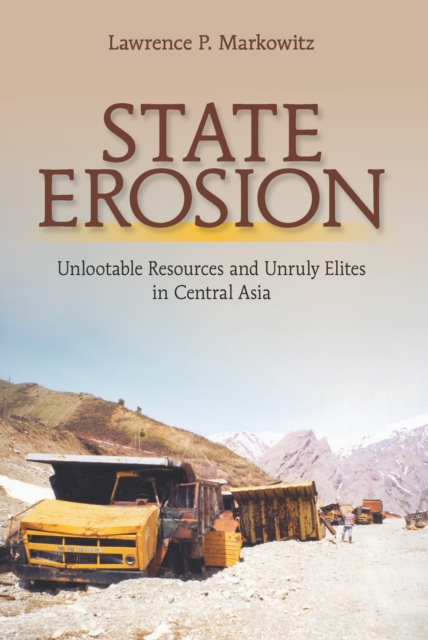
State failure is a central challenge to international peace and security in the post-Cold War era. Yet theorizing on the causes of state failure remains surprisingly limited. In State Erosion, Lawrence P. Markowitz draws on his extensive fieldwork in two Central Asian republics-Tajikistan, where state institutions fragmented into a five-year civil war from 1992 through 1997, and Uzbekistan, which constructed one of the largest state security apparatuses in post-Soviet Eurasia-to advance a theory of state failure focused on unlootable resources, rent seeking, and unruly elites.In Tajikistan, Uzbekistan, and other countries with low capital mobility-where resources cannot be extracted, concealed, or transported to market without state intervention-local elites may control resources, but they depend on patrons to convert their resources into rents. Markowitz argues that different rent-seeking opportunities either promote the cooptation of local elites to the regime or incite competition over rents, which in turn lead to either cohesion or fragmentation. Markowitz distinguishes between weak states and failed states, challenges the assumption that state failure in a country begins at the center and radiates outward, and expands the "e;resource curse"e; argument to include cash crop economies, where mechanisms of state failure differ from those involved in fossil fuels and minerals. Broadening his argument to weak states in the Middle East (Syria and Lebanon) and Africa (Zimbabwe and Somalia), Markowitz shows how the distinct patterns of state failure in weak states with immobile capital can inform our understanding of regime change, ethnic violence, and security sector reform.


Informationen zum Buch
Englisch

Verschenken Sie dieses Buch noch heute
Es ist ganz einfach
1 Legen Sie das Buch in Ihren Warenkorb und wählen Sie den Versand als Geschenk 2 Wir schicken Ihnen umgehend einen Gutschein 3 Das Buch wird an die Adresse des beschenkten Empfängers geliefertDas könnte Sie auch interessieren





 /
/
 Broschur
 133.89
€
133.89
€






 /
Broschur
27.09
€
/
Broschur
27.09
€


 /
Broschur
52.69
€
/
Broschur
52.69
€
 /
Broschur
17.09
€
/
Broschur
17.09
€





Hallo! Ich bin Libroamiko, dein Buchberater.
Wie kann ich dir helfen?