
 Kontakt
 Wie einkaufen
Versand
Kaufberater
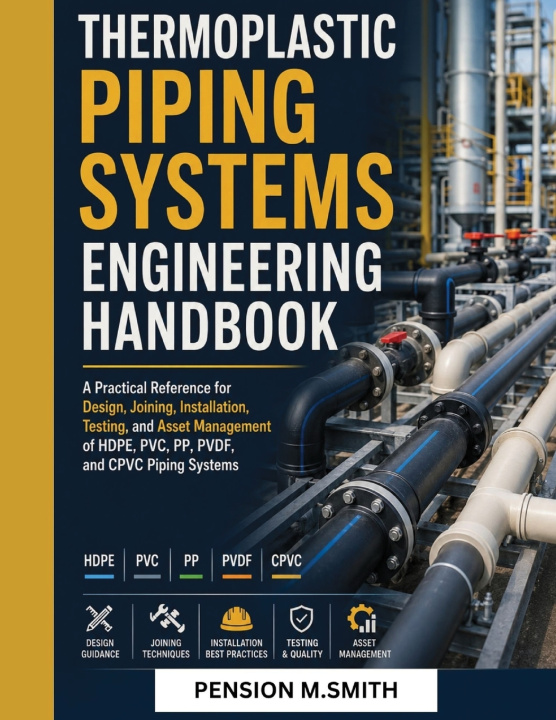
THERMOPLASTIC PIPING SYSTEMS ENGINEERING HANDBOOK
A Practical Reference for Design, Joining, Installation, Testing, and Asset Management of HDPE, PVC, PP, PVDF, and CPVC Piping Systems
 Englisch
 69 b
69 b
 Demnächst
 Neu
Neu
Bis zu 30 Tage Rückgaberecht

A thermoplastic piping system is only as dependable as the chain of decisions behind it.
Material selection, pressure rating, hydraulics, structural behavior, thermal movement, joining, installation, inspection, testing, and long-term asset decisions are tightly connected. A sound calculation can still lead to a weak conclusion if the field condition, joint quality, material data, or operating environment has not been verified.
Thermoplastic Piping Systems Engineering Handbook brings those disciplines together in one practical, lifecycle-oriented reference. It follows the piping system from initial material selection and design through joining and installation, quality verification, in-service performance, failure investigation, and rehabilitation planning.
Inside, readers can:
- evaluate the engineering behavior and application fit of major thermoplastic pipe families;
- work through pressure-rating, hydraulic-flow, surge, buried-pipe, support-spacing, and thermal-movement calculations;
- understand heat-fusion, solvent-cement, and mechanical joining methods and the defects that can compromise them;
- connect open-trench and trenchless installation practice with the design assumptions those methods must satisfy;
- build stronger inspection, field-testing, traceability, qualification, and quality-assurance programs;
- investigate crack growth, environmental stress cracking, chemical exposure, permeation, and other failure mechanisms;
- apply condition assessment, risk prioritization, remaining-life thinking, and repair-or-rehabilitation decision frameworks to aging systems.
The reference is equally useful as a sequential learning resource and as a targeted project lookup: readers can move directly to material selection, pressure design, surge, joining, installation, testing, chemical service, failure analysis, or asset management while still seeing how that question connects to the rest of the system.
This handbook is written for practicing design and civil engineers, field and installation engineers, municipal and utility engineering staff, and asset-management professionals working with water, gas, sewer, drainage, and industrial process piping.
For real projects, current standards, jurisdiction-specific requirements, certified material data, and qualified professional judgment remain essential. Use this handbook as the structured technical reference that helps you connect those requirements with the calculations, field practices, verification methods, and lifecycle questions that matter.


Informationen zum Buch
Englisch
Kategorie
