
 Kontakt
 Wie einkaufen
Versand
Kaufberater
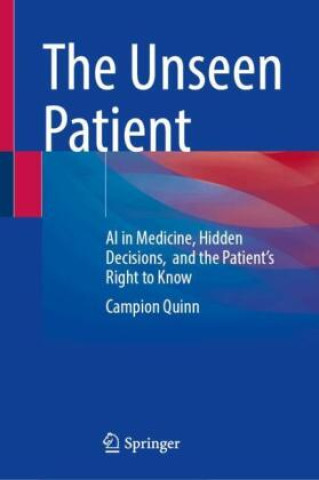
The Unseen Patient
AI in Medicine, Hidden Decisions, and the Patient's Right to Know.DE
 Englisch
 307 b
307 b
 Demnächst
 Neu
Neu
 Veröffentlichung 14. 04. 2027
Bis zu 30 Tage Rückgaberecht

This book is a clinically grounded, evidence-based book about the hidden use of artificial intelligence in medical care and the patient's right to know when software shapes diagnosis, documentation, triage, insurance access, and clinical attention. The book does not argue against medical AI. It argues for visible, understandable, and accountable AI. Patients should know when an AI system affects their care, what role the tool played, what evidence supports it, who remains responsible, and how they can challenge an error.
The manuscript combines patient-centered narrative, clinical explanation, health policy analysis, biomedical ethics, and medical informatics. Composite patient stories show how AI enters ordinary care: a risk score appears in the chart before a visit begins, an ambient scribe drafts a note the patient may never fully understand, a symptom checker guides a frightened patient at two in the morning, an insurer's algorithmic review shapes access to rehabilitation, and a clinical reasoning assistant produces fluent prose that makes uncertainty look like judgment. The book's central claim is straightforward: the standard for trustworthy medicine has not changed, even though the instrument has. A patient-centered AI system requires disclosure, validated use, subgroup testing, privacy protection, auditability, human accountability, appeal rights, and continuous monitoring.
Dr. Quinn brings unusual first-person authority to this subject. He has practiced as an internist and emergency physician, chaired a hospital Quality Assurance Committee, served as a managed-care medical director and Chief Medical Officer, published on good-faith medical-necessity adjudication and formulary systems, worked in pharmaceutical medical affairs, advised life-sciences and medtech clients, written prior books on AI in medicine and medical communications, and built an AI-enabled board-preparation platform. The result is not a warning from outside medicine. It is an insider's account of a system he helped build and now argues should become more visible, accountable, and contestable.
This is an ideal guide for all medical professionals using AI in practice, physician leaders, and hospital administrators.


Informationen zum Buch
Englisch

Verschenken Sie dieses Buch noch heute
Es ist ganz einfach
1 Legen Sie das Buch in Ihren Warenkorb und wählen Sie den Versand als Geschenk 2 Wir schicken Ihnen umgehend einen Gutschein 3 Das Buch wird an die Adresse des beschenkten Empfängers geliefertHallo! Ich bin Libroamiko, dein Buchberater.
Wie kann ich dir helfen?