
 Kontakt
 Wie einkaufen
Versand
Kaufberater
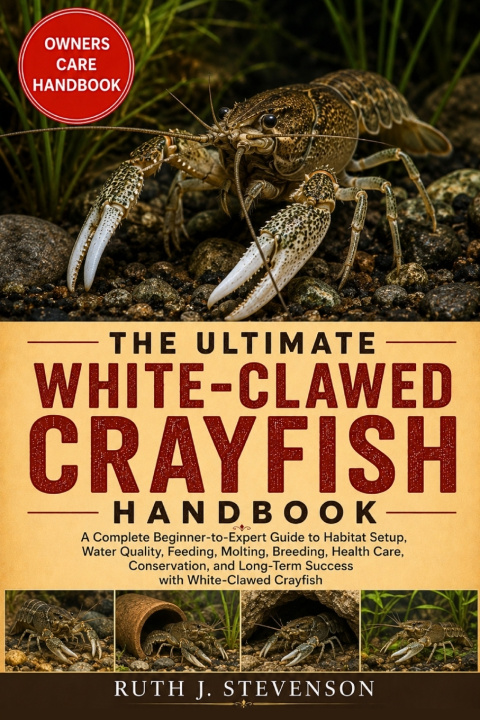
THE ULTIMATE WHITE-CLAWED CRAYFISH HANDBOOK
A Complete Beginner-to-Expert Guide to Habitat Setup, Water Quality, Feeding, Molting, Breeding, Health Care, Conservation, and Long-Term Success with White-Clawed Crayfish
 Englisch
 39 b
39 b
 Neu
Neu
Bis zu 30 Tage Rückgaberecht

Introduction to the White-Clawed Crayfish
The White-Clawed Crayfish is one of the most fascinating freshwater crustaceans found in Europe. Known for its distinctive pale-colored claws and important ecological role, this species has attracted the attention of naturalists, conservationists, aquarists, and freshwater enthusiasts for generations. Although often overshadowed by larger and more widely recognized aquatic animals, the White-Clawed Crayfish plays a vital role in maintaining the health and balance of freshwater ecosystems. Its presence is frequently considered an indicator of good water quality, making it an important species for understanding the condition of rivers, streams, and other aquatic habitats.
Unlike marine crustaceans that inhabit oceans and coastal waters, the White-Clawed Crayfish spends its entire life in freshwater environments. It has evolved to thrive in clean rivers, streams, ponds, and lakes where oxygen levels remain high and pollution is minimal. These habitats provide the shelter, food, and environmental stability necessary for survival. Over countless generations, the species has adapted to life among rocks, submerged roots, aquatic vegetation, and riverbanks, developing behaviors and physical characteristics that allow it to avoid predators, find food, and reproduce successfully.
The White-Clawed Crayfish is often described as both an engineer and a recycler within freshwater ecosystems. Through its feeding activities, movement, and interactions with the environment, it contributes to nutrient cycling and helps maintain ecological balance. It consumes a variety of organic materials, helping break down plant matter and animal remains that would otherwise accumulate in aquatic systems. At the same time, it serves as an important food source for fish, birds, mammals, and other predators. This dual role highlights its significance within the food web and demonstrates why its conservation is so important.
Despite its ecological value, the White-Clawed Crayfish faces numerous challenges in the modern world. Habitat destruction, pollution, invasive species, and disease have caused significant population declines in many regions. As a result, conservation efforts have become increasingly important in protecting remaining populations and restoring suitable habitats. Understanding the species, its biology, and its needs is essential not only for those interested in keeping crayfish but also for anyone who values freshwater biodiversity and environmental stewardship.
This handbook explores every aspect of White-Clawed Crayfish care, biology, behavior, and conservation. Whether the reader is a beginner seeking a deeper understanding of the species or an experienced enthusiast looking to refine their knowledge, a strong foundation begins with learning about the crayfish itself. Appreciating its history, appearance, distribution, and ecological importance provides the context necessary for understanding why this remarkable freshwater crustacean deserves both attention and protection.
History and Natural Background
The history of the White-Clawed Crayfish stretches back thousands of years and is closely tied to the freshwater ecosystems of Europe. Long before modern scientific classification, these crayfish inhabited rivers, streams, and lakes across large portions of the continent. They evolved alongside countless other freshwater organisms, adapting to changing climates, geological events, and environmental conditions. Their long history within European waterways has made them an integral component of many natural ecosystems.


Informationen zum Buch
Englisch
Kategorie

Verschenken Sie dieses Buch noch heute
Es ist ganz einfach
1 Legen Sie das Buch in Ihren Warenkorb und wählen Sie den Versand als Geschenk 2 Wir schicken Ihnen umgehend einen Gutschein 3 Das Buch wird an die Adresse des beschenkten Empfängers geliefertHallo! Ich bin Libroamiko, dein Buchberater.
Wie kann ich dir helfen?