
 Kontakt
 Wie einkaufen
Versand
Kaufberater
The Trairi River Belabours Hinterland
 Englisch
 37 b
37 b
Bis zu 30 Tage Rückgaberecht
Kunden kauften auch



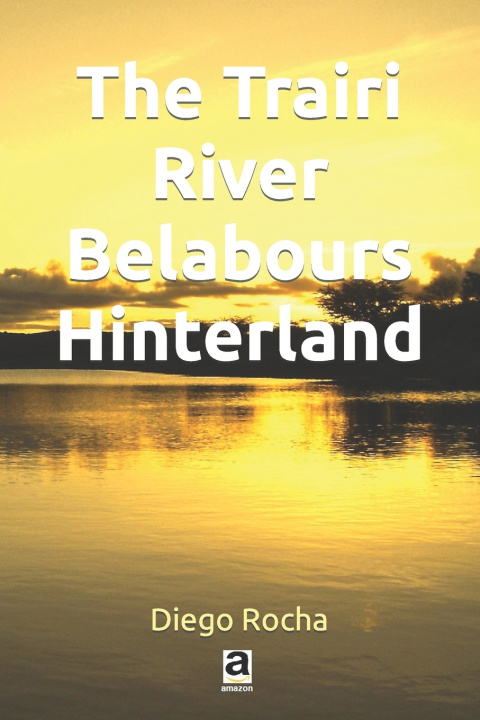
The Trairi River Belabours Hinterland is a written novel that belongs to the school of neorealism and it includes the aspect of a country regionalism. It is with the presentation of the intellectual, lawyer, university Professor of law and writer PhD David de Medeiros Leite. This book narrates a corner of northeastern Brazil with a timeline between the 1960s and 1980s. The novel chronicles typically Brazilian social factors such as: poverty, hunger, social helplessness, pride of politicians and farm owners, hopelessness and government dictatorships - something to partly portray periods lived in various chapters of Brazil's history. At time the story gives way to the softness of companionship, poetry, the appreciation of country cuisine, the beautiful landscapes of harsh nature, the experience in a traditional place with strong traces of a hospitable and fraternal community. The novel is written in third-person by a narrator-character named Mario, but there're voices of other characters allowed in the course of facts and situations. As for the genre of the novel follows the line of groups of writers who analyze the structures of urban and rural realities, that is the conflict of man with the geographical and socioeconomic environment, besides bringing classic subjects of national literature such as: "rule of the coronels" (Brazil's Old Republic), rural exodus, drought, elitism, corruption in governments, exported gangsterism, governmental authoritarianism, populism. Differentiating a little from the novels already published in this category, current airs are introduced when for example the dilemma of drought is presented as a consequence of deforestation and other corrupt activities that destroy the environment; issues such as homophobia, xenophobia, political ideological disputes of the Right-wing political versus Left-wing in schools, partisan proselytizing in public offices, political phobias, false moralism, etc., it all is reported in this book. The novel comes as well as criticism of social and governmental utopias in a fictitious state to the Brazilian intertwined in contradictions, provincialism, authoritarianism, antisemitism, racism and segregationism, which society leaders despise their people, their culture, their nature, in aversion to the roots and fruits from hinterland way of life. Moreover about the protagonist Mario, it has been similar to the conception of the anti-hero (modern hero), dressed by the rascality, cleverness, "Brazilian way" (rascality), in order to circumvent the rules of the law and survive in the midst of the challenges and difficulties of life. There are numerous characters who are social types of the reality of urban and rural spaces, such as the prostitute, the churchgoer, the landless, the beggar, the priest, the mayor, the judge, the chief of police officer, the gay, etc. They represent the displaced, the excluded and the exalted in the social context; they have a tragic and happy ending. Likewise to the mysticism present in this book, ghostly sites (castle in Tapuia Hill), devils and popular legends also give an air of mystery and curiosity to the reader, because events such as: "flying saucer", "backwoods mother-of-water (a kind of mermaid)", "the secrets of Sumé", "chupa-cabras" (an extraterrestrial monster) are present. The very outcome of the novel has a prophetic, perhaps apocalyptic-religious air, in the chapter "The Hinterland turned into Sea", leaving the reader intrigued. Besides the last scene tells of a flood that puts an end to fifteen years of drought in the city of Trairi Waterfall when the Trairi River quite large causes a dam burst, destroying the city, drowning people. Based on real facts, it is a historical parallel that the author makes with the tragic flood that occurred on April 1st, in 1981 (ironically, April Fool's Day), in the town Santa Cruz of Trairi which left the Rio Grande do Norte State (BR) without electric light for three weeks.


Informationen zum Buch
Englisch
