
 Kontakt
 Wie einkaufen
Versand
Kaufberater
 Englisch
 38 b
38 b
 Neu
Neu
Bis zu 30 Tage Rückgaberecht

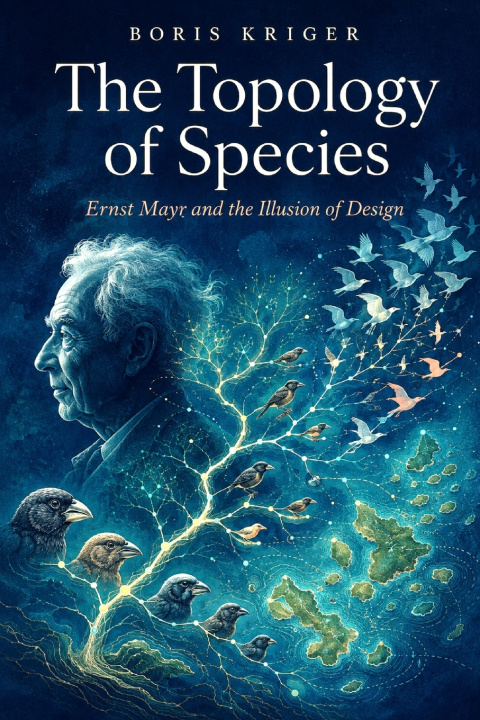
In March 1923, an eighteen-year-old medical student stood at the edge of a pond in Saxony and saw a duck that was not supposed to be there. The species had not been recorded in the region since 1845. The local ornithological club refused to believe him. He was made to travel to Berlin and submit to an interrogation by a man he had never met, who questioned him until he was satisfied, and only then was the duck permitted to exist.
The student was Ernst Mayr. He would spend the next eighty-two years asking the same question that pond had put to him: who decides where one thing ends and another begins, and on what grounds?
Mayr gave the twentieth century its working definition of a species. He described twenty-six species of birds and four hundred and forty-five subspecies - and then spent decades explaining why such categories cannot bear the weight that biology, and later politics, kept piling onto them. He argued that natural selection acts on whole organisms rather than on tidy isolated genes, and said so to Richard Dawkins's face, politely, at length, and without moving an inch. He traced scientific racism not to data but to a habit of thought. He popularised the word teleonomy so that biologists could speak of purpose without smuggling in a purposer. He lived to a hundred, published fourteen of his twenty-five books after the age of sixty-five, and was still writing when the century that he had helped explain was safely over.
This book tells his life and takes his central problem seriously. A species, it argues, is best understood the way a topologist understands a shape: not as an object with an essence, but as a structure that persists - a connected region of gene flow that holds together for a long time and then, sometimes, comes apart. Boundaries in nature are real without being sharp, and the sharpness is ours. What looks like design is what persistence looks like from the inside.
KEYWORDS Ernst Mayr biological species concept evolutionary synthesis
Speciation population thinking teleonomy philosophy of biology


Informationen zum Buch
Englisch

Verschenken Sie dieses Buch noch heute
Es ist ganz einfach
1 Legen Sie das Buch in Ihren Warenkorb und wählen Sie den Versand als Geschenk 2 Wir schicken Ihnen umgehend einen Gutschein 3 Das Buch wird an die Adresse des beschenkten Empfängers geliefertHallo! Ich bin Libroamiko, dein Buchberater.
Wie kann ich dir helfen?