
 Kontakt
 Wie einkaufen
Versand
Kaufberater
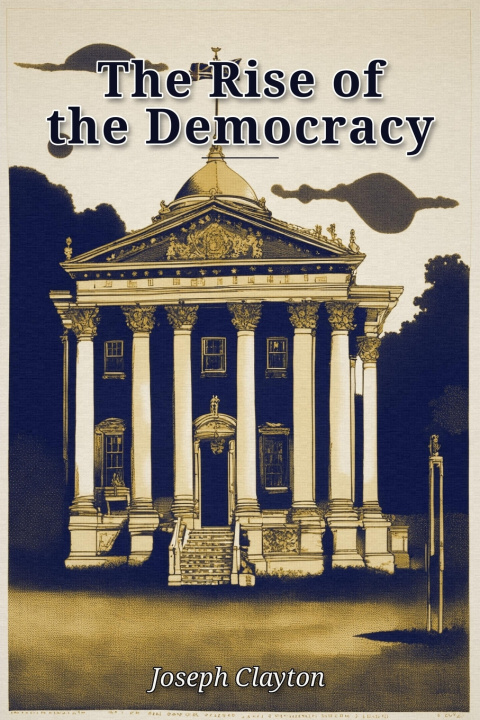
The Rise of the Democracy
 Englisch
 75 b
75 b
 Neu
Neu
Bis zu 30 Tage Rückgaberecht

"T he Rise of the Democracy" by Joseph Clayton is a historical account written in the early 20th century. The work explores the evolution of political democracy in England, tracing its development from early struggles against monarchical absolutism through significant events such as the signing of the Magna Carta and the establishment of parliamentary representation. The book seeks to illuminate the persistent fight for self-governance by the English people, highlighting key figures and movements that have shaped democratic ideals. The opening of the work sets the stage for an indepth examination of England's march toward democracy. It begins with a focus on the British influence on global democratic movements, detailing how the notion of governance by elected representatives emerged from centuries of resistance against tyranny and autocracy. Clayton emphasizes the importance of historical landmarks, such as the roles played by church leaders like Anselm and Thomas à Becket, which laid the groundwork for constitutional liberties. As he outlines the key themes of the book, he points out that while democracy in England evolved through practical reforms and not through grand political philosophies, it nonetheless represents a significant development in the struggle for individual liberties and collective governance.THE EARLY STRUGGLES AGAINST THE ABSOLUTISM OF THE CROWN T HE GREAT CHURCHMEN We are far from any thoughts of democracy in the early struggles against the absolutism of the Crown. The old love of personal liberty that is said to have characterised the Anglo-Saxon had no political outlet under Norman feudalism. What we note is that three Archbishops of Canterbury were strong enough and brave enough to stand up against the unchecked rule of kings, and the names of these great Archbishops-Anselm, Thomas a Becket, and Stephen Langton-are to be honoured for all time for the services they rendered in the making of English liberties. Not one of the three was in any sense a democrat. It is not till the latter part of the fourteenth century that we find John Ball, a wandering, revolutionary priest, uttering for the first time in England a democratic doctrine. Anselm, Becket, and Langton did their work, as Simon of Montfort, and as Eliot and Hampden worked later, not for the sake of a democracy, but for the restriction of an intolerable autocracy. All along in English history liberties have been gained and enlarged


Informationen zum Buch
Englisch

Verschenken Sie dieses Buch noch heute
Es ist ganz einfach
1 Legen Sie das Buch in Ihren Warenkorb und wählen Sie den Versand als Geschenk 2 Wir schicken Ihnen umgehend einen Gutschein 3 Das Buch wird an die Adresse des beschenkten Empfängers geliefertHallo! Ich bin Libroamiko, dein Buchberater.
Wie kann ich dir helfen?