
 Kontakt
 Wie einkaufen
Versand
Kaufberater
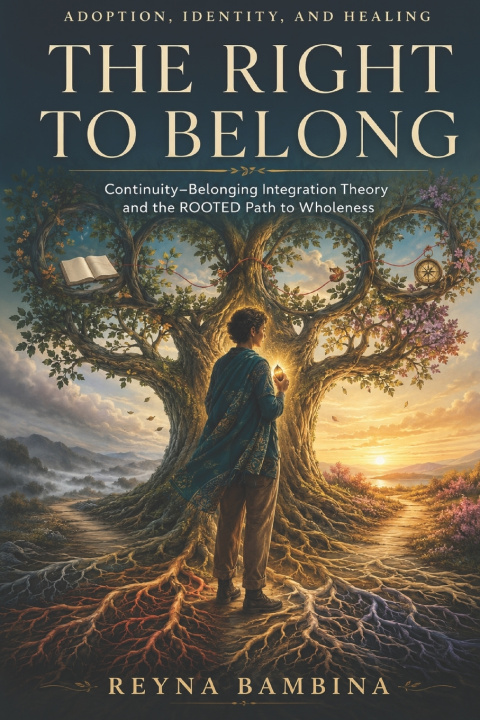
The Right to Belong
Continuity-Belonging Integration Theory and the ROOTED Path to Wholeness
 Englisch
 42 b
42 b
 Neu
Neu
Bis zu 30 Tage Rückgaberecht

Adoption is often described as a new beginning-but every adoption takes place after another beginning has already occurred.
In The Right to Belong, Reyna Bambina introduces Continuity-Belonging Integration Theory (CBIT), an original conceptual framework exploring how adopted people may hold origin, present relationships, loss, culture, unanswered questions, and personal identity within one complete life.
Rejecting both the idea that adoption is automatically traumatic and the expectation that love should erase every loss, the book honors the extraordinary diversity of adoptee experiences. Some adopted people experience little adoption-related distress, while others may revisit questions of separation, identity, medical history, cultural disconnection, loyalty, or belonging throughout different stages of life.
CBIT identifies six continuity systems that may support greater wholeness: Narrative Continuity, Recognized Loss, Relational Permission, Identity Mirroring, Embodied Safety, and Information and Contact Agency. These systems help reveal where adoptees may need truth, grief recognition, cultural connection, emotional freedom, safer relationships, or greater control over search and reunion decisions.
The book also introduces the ROOTED Integration Protocol, a proposed adoptee-centered pathway to recognizing the complete story, orienting to present safety, opening space for grief, tracking loyalty conflicts, expanding identity and mirroring, and directing search, reunion, contact, and boundaries. Fictional composite cases, reflection exercises, coping practices, and a proposed clinical framework offer practical ways to explore these experiences without imposing gratitude, forgiveness, reunion, or one "correct" adoption narrative.
Inclusive of transracial, international, LGBTQ+, disabled, and neurodivergent adoptees, The Right to Belong emphasizes that no adopted person exists to prove that adoption was either redemptive or tragic. Each person retains the right to determine what family, culture, healing, and belonging mean within their own life.
Ultimately, this book makes room for truths that are too often forced into competition: love and loss, gratitude and grief, family and family, certainty and mystery. Wholeness does not require reducing those truths to one simple story. It begins when none of them must be erased.


Informationen zum Buch
Englisch

Verschenken Sie dieses Buch noch heute
Es ist ganz einfach
1 Legen Sie das Buch in Ihren Warenkorb und wählen Sie den Versand als Geschenk 2 Wir schicken Ihnen umgehend einen Gutschein 3 Das Buch wird an die Adresse des beschenkten Empfängers geliefertHallo! Ich bin Libroamiko, dein Buchberater.
Wie kann ich dir helfen?