
 Kontakt
 Wie einkaufen
Versand
Kaufberater
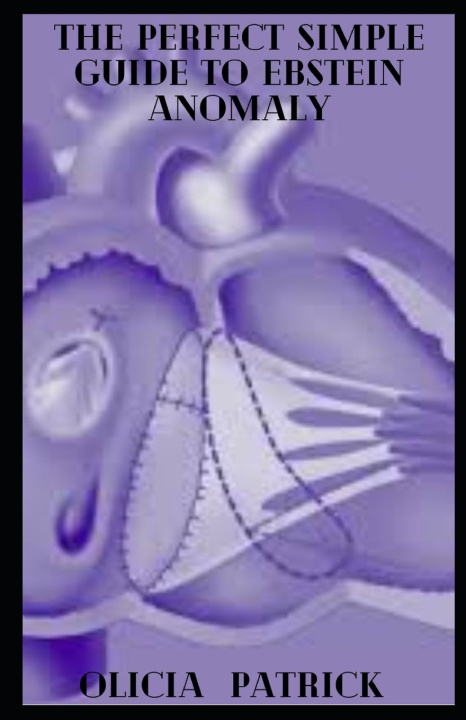
The Perfect Simple Guide To Ebstein Anomaly
700 Diagnosis, Treatment And Related Conditions
 Englisch
 46 b
46 b
Bis zu 30 Tage Rückgaberecht

Ebstein Anomaly is a rare congenital heart disorder in which parts of the tricuspid valve are defective.
The tricuspid valve separates the right lower heart chamber (right ventricle) from the right upper heart chamber (right atrium).
In Ebstein Anomaly, the positioning of the tricuspid valve and how it functions to separate the two chambers is unusual.
Ebstein Anomaly is a malformation of the tricuspid valve and right ventricle typically featured by:
1. Adherence of the septal and posterior leaflets to the underlying myocardium.
2. Downward (apical) displacement of the functional annulus.
3. Dilation of the atrialized portion of the right ventricle, with various degrees of hypertrophy and thinning of the wall.
4. Redundancy, fenestrations and tethering of the anterior leaflet.
5. Dilation of the right atrioventricular junction.
In persons with Ebstein anomaly, the leaflets are positioned deeper into the right ventricle instead of the normal position.
The leaflets are often bigger than normal.
The defect most often induces the valve to work poorly, and blood may go the wrong way.
Instead of flowing out to the lungs, the blood returns back into the right atrium.
The backup of blood flow can result in heart enlargement and fluid buildup in the body.
There may be narrowing of the valve that leads into the lungs (pulmonary valve).
In many instances, patients also have atrial septal defect (a hole in the wall that separates the heart's two upper chambers) and blood flow across the hole cause oxygen-poor blood to go to the body.
This can produce cyanosis, a blue tint to the skin caused by oxygen-poor blood.
Ebstein anomaly happens as a baby forms in the womb.
Studies have shown both genetic and environmental risk factors:
The anomaly is more frequent in twins and in those with a family history of congenital heart disorder.
Environmental factors found in studies are maternal exposure to benzodiazepines (tranquillizers).
Maternal lithium therapy (for depression) can infrequently result in Ebstein anomaly in the baby.


Informationen zum Buch
Englisch

Verschenken Sie dieses Buch noch heute
Es ist ganz einfach
1 Legen Sie das Buch in Ihren Warenkorb und wählen Sie den Versand als Geschenk 2 Wir schicken Ihnen umgehend einen Gutschein 3 Das Buch wird an die Adresse des beschenkten Empfängers geliefertHallo! Ich bin Libroamiko, dein Buchberater.
Wie kann ich dir helfen?