
 Kontakt
 Wie einkaufen
Versand
Kaufberater
The Money Instinct
 Englisch
 36 b
36 b
 Demnächst
 Neu
Neu
Bis zu 30 Tage Rückgaberecht

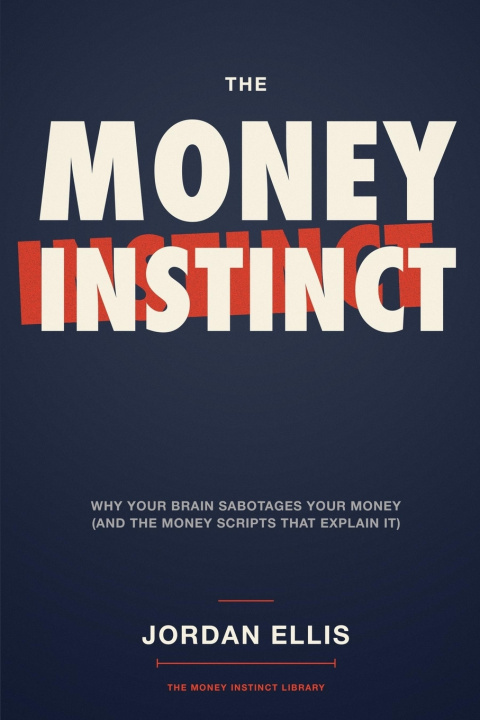
In The Money Instinct, author Jordan Ellis explores the hidden psychological mechanisms that drive our most common financial mistakes. This is not a traditional personal finance book about spreadsheets or raw willpower; instead, it serves as a field guide to the ancient brain wiring that quietly sabotages modern financial choices. Through an examination of eleven distinct cognitive patterns-including the dopamine loop of online shopping, the invisible traps of lifestyle creep, the anxiety-driven avoidance of looking at bank balances, and the sunk-cost fallacy-Ellis explains why even the most rational people consistently act against their own financial interests.
Many of us know exactly what we should do with our money, yet find ourselves doing the exact opposite moments later. Ellis reveals that this gap between knowledge and action isn't a lack of discipline; it is a fundamental feature of how our minds are constructed. When you understand that your brain evolved to prioritize immediate certainty, aggressively conserve resources, and constantly measure social status against peers, your seemingly irrational money habits suddenly make perfect sense.
The book draws on behavioral economics and psychology to reveal how the human mind is calibrated for a world of ancestral scarcity, leaving it wildly mismatched for a modern landscape built on one-tap checkout, status-driven social media, and infinite credit. For instance, Ellis explains how the "Dopamine Loop" makes the anticipation of buying something feel far better than actually owning it, and how "The Anchor" pulls our judgment toward engineered price tags before we can do the math. He unpacks why "The Creep" causes our lifestyle to invisibly expand to swallow every raise, and why "The Stranger That Is Future You" makes saving for retirement feel like giving hard-earned money away to someone you will never meet.
Rather than asking readers to simply try harder or feel guilty, the book provides concrete, structural "overrides" for each psychological trap. Because you cannot out-argue an instinct that is millions of years older than your rational mind, Ellis emphasizes environmental engineering over willpower. He equips readers with actionable moves-like the 24-hour gap for impulsive purchases, the look-without-fixing ritual for financial anxiety, and the fresh-start reset for sunk costs. These practical strategies allow readers to step out of moments of temptation or panic, giving the slower, more rational part of the brain time to make deliberate choices. Ultimately, The Money Instinct offers a compassionate roadmap to outsmarting your own brain, teaching you to stop fighting a machine you didn't install and build lasting financial security around it.


Informationen zum Buch
Englisch

Verschenken Sie dieses Buch noch heute
Es ist ganz einfach
1 Legen Sie das Buch in Ihren Warenkorb und wählen Sie den Versand als Geschenk 2 Wir schicken Ihnen umgehend einen Gutschein 3 Das Buch wird an die Adresse des beschenkten Empfängers geliefertHallo! Ich bin Libroamiko, dein Buchberater.
Wie kann ich dir helfen?