
 Kontakt
 Wie einkaufen
Versand
Kaufberater
 Englisch
 30 b
30 b
 Neu
Neu
Bis zu 30 Tage Rückgaberecht

A child's name was restored. The homicide remains open.
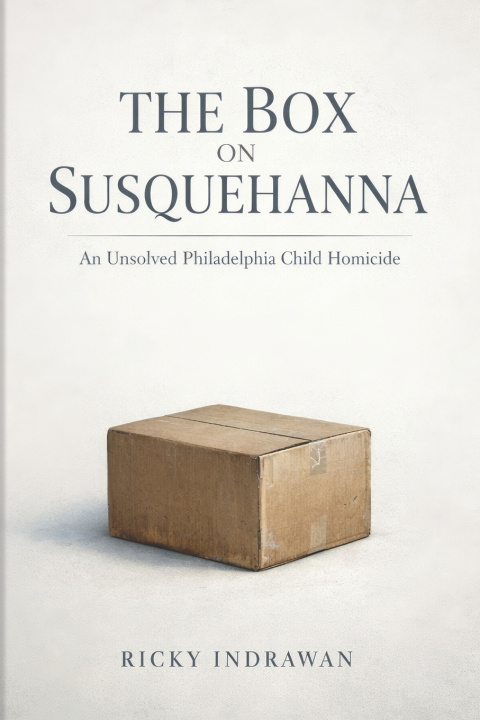
In February 1957, the body of a young boy was found inside a cardboard bassinet box off Susquehanna Road in Philadelphia. He was malnourished, bruised, and unknown. For sixty-five years, the child at the center of this Philadelphia cold case had no confirmed identity. In 2022, forensic genetic genealogy restored his name: Joseph Augustus Zarelli.
The Box on Susquehanna is a historical true crime investigation into the discovery, public search, forensic record, disputed witness accounts, and unanswered questions surrounding Joseph's death. It reconstructs the uncertain reporting sequence, the roadside scene, the autopsy findings, and the evidence that suggested prolonged harm before the fatal blunt-force injury.
The book follows the investigation as Philadelphia police circulated morgue photographs, distributed hundreds of thousands of flyers, traced the bassinet carton, blanket, and nearby cap, and searched for the household from which the child had vanished. Each lead produced information, but none supplied the missing link between Joseph's life and the place where he was found.
It also examines the theories that accumulated as the case moved from active investigation into public memory. Remington Bristow's long pursuit of answers, the foster-home theory, the account attributed to "Martha," and other competing explanations are considered according to what the record can support-not according to how often a claim has been repeated. The difference between evidence, inference, recollection, and folklore remains visible throughout.
Two exhumations, advances in DNA analysis, and forensic genetic genealogy eventually answered the question of identity. Yet naming Joseph did not identify who killed him, who had custody of him during his final months, where he died, or why no one reported him missing. The homicide remains open, and the book treats that distinction as central rather than incidental.
Written in a restrained, victim-centered investigative style, this account combines historical reconstruction with a close examination of contradictions, evidentiary limits, and the human cost of silence. A detailed chronology and key-figure reference help readers follow the case across decades without turning uncertainty into false certainty.
For readers of historical true crime, Philadelphia cold cases, forensic genealogy, and unresolved homicide investigations, The Box on Susquehanna offers a careful account of what is known, what has weakened under scrutiny, and what still waits for an answer.


Informationen zum Buch
Englisch

Verschenken Sie dieses Buch noch heute
Es ist ganz einfach
1 Legen Sie das Buch in Ihren Warenkorb und wählen Sie den Versand als Geschenk 2 Wir schicken Ihnen umgehend einen Gutschein 3 Das Buch wird an die Adresse des beschenkten Empfängers geliefertHallo! Ich bin Libroamiko, dein Buchberater.
Wie kann ich dir helfen?