
 Kontakt
 Wie einkaufen
Versand
Kaufberater
 Englisch
 88 b
88 b
Bis zu 30 Tage Rückgaberecht
Kunden kauften auch


 /
/
 Broschur
 56.79
€
56.79
€




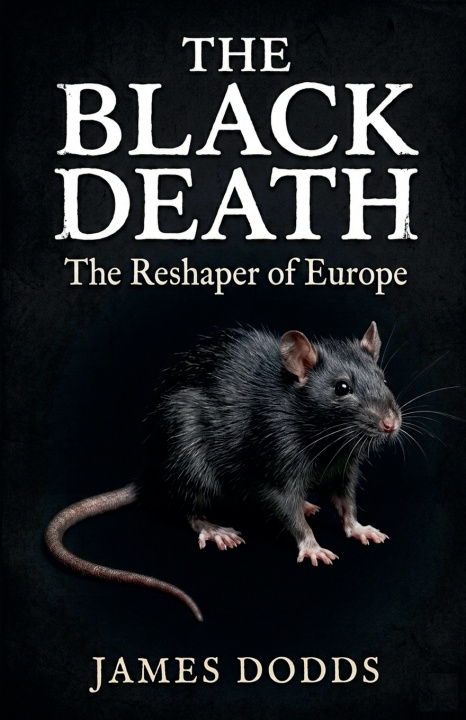
The Black Death: The Reshaper of Europe
The worst catastrophe in European history. The most consequential. A reckoning with what a bacterium destroyed, and what, from the ruins, it made possible.
In the autumn of 1347, a fleet of Genoese trading ships docked in the harbour of Messina, Sicily. Most of the sailors aboard were dead. Those still alive were covered in black, pus-weeping swellings the size of eggs. The port authorities ordered the ships back out to sea. It was already too late. Within five years, between a third and a half of Europe's population was dead, somewhere between twenty-five and thirty-eight million people, in the greatest demographic catastrophe in recorded Western history.
But The Black Death: The Reshaper of Europe is not, at its heart, a book about dying. It is a book about what the dying made. The feudal system that had bound the European peasantry in legal servitude for four centuries dissolved in the generation after the epidemic, not because anyone decided to abolish it, but because the economics of a labour-scarce world made it unworkable. The authority of the Catholic Church, the most powerful institution in European history, cracked under the weight of pastoral failure and was never fully repaired, preparing the ground from which the Protestant Reformation would eventually grow. Galenic medicine, whose inadequacy against the plague was demonstrated with brutal public clarity, began its slow, contested retreat before the empirical tradition that would eventually produce modern science. The arts erupted in a new intimacy with the individual human face and the individual human death. And from the meadow at Mile End, where a fourteen-year-old king listened to the demands of the men of Kent and Essex in 1381, the long road toward modern democratic politics can be traced, however indirectly and however far.
This is a work of synthetic historical scholarship: a single, coherent argument made across seventeen chapters and more than a hundred thousand words, connecting the biological event of the fourteenth-century epidemic to the civilisational transformation of the following two centuries. It does not claim that the plague caused the Renaissance, or the Reformation, or capitalism, in any simple or deterministic sense. It claims something more precise and more defensible: that the plague was the necessary disruption without which those transformations would not have occurred when they did, in the institutional form they took, with the specific characteristics that define the modern Western world. The argument is made through evidence, the chronicles, the manorial records, the plague tractates, the literary and artistic testimony of those who survived and through engagement with the historians, economists, and scholars who have debated the plague's consequences for the better part of a century.
Throughout, the book insists on holding two things simultaneously: the structural argument about forces and institutions, and the human reality of specific people whose lives and deaths those forces operated through. Agnolo di Tura, who buried his five children with his own hands in a Sienese plague pit. John Clyn, the Irish friar who passed his chronicle to an unknown future he did not expect to see. Guy de Chauliac, the greatest physician of his age, confessing with devastating candour that he and his profession could do nothing. John Ball, preaching from a village green that when Adam delved and Eve span, there were no gentlemen. These voices carry the history that the statistics cannot.
"The living were scarce." Henry Knighton's bleak phrase is the book's organising image: the scarcity of the living was simultaneously the source of the economic transformation and the fact of the dead and no account of the one can be honest that does not hold the other equally in view.


Informationen zum Buch
Englisch

Verschenken Sie dieses Buch noch heute
Es ist ganz einfach
1 Legen Sie das Buch in Ihren Warenkorb und wählen Sie den Versand als Geschenk 2 Wir schicken Ihnen umgehend einen Gutschein 3 Das Buch wird an die Adresse des beschenkten Empfängers geliefertDas könnte Sie auch interessieren

 /
Broschur
43.49
€
/
Broschur
43.49
€


Hallo! Ich bin Libroamiko, dein Buchberater.
Wie kann ich dir helfen?