
 Kontakt
 Wie einkaufen
Versand
Kaufberater
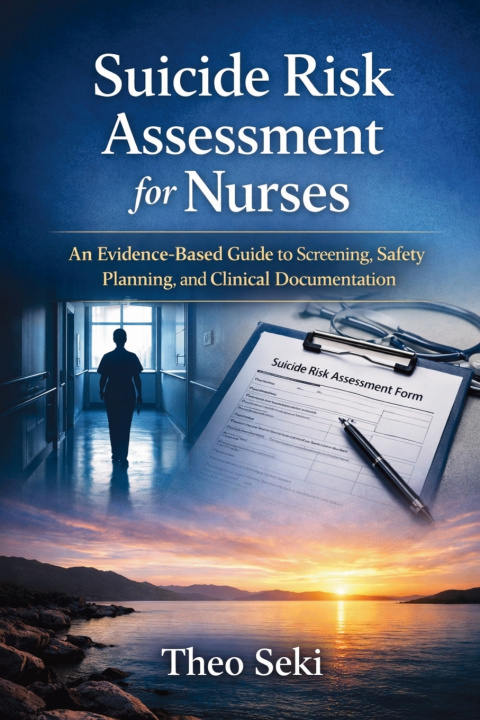
Suicide Risk Assessment for Nurses
An Evidence-Based Guide to Screening, Safety Planning, and Clinical Documentation
 Englisch
 41 b
41 b
Bis zu 30 Tage Rückgaberecht

Suicide Risk Assessment for Nurses
An Evidence-Based Guide to Screening, Safety Planning, and Clinical Documentation
Suicide claims over 49,000 lives annually in the United States, and research consistently demonstrates that most individuals who die by suicide have contact with healthcare providers in the months before their deaths. Nurses working across emergency departments, medical-surgical units, psychiatric facilities, primary care clinics, schools, and correctional settings encounter patients at risk for suicide daily. Yet many nurses report feeling inadequately prepared to assess suicide risk, develop safety plans, or document their clinical reasoning effectively. This evidence-based clinical guide bridges that gap by providing validated screening protocols, step-by-step intervention guidance, and comprehensive documentation templates that translate current research into practical bedside application.
The content begins with foundational knowledge of risk factors, warning signs, and regulatory requirements including Joint Commission National Patient Safety Goals and Zero Suicide framework implementation. Readers learn to administer and interpret validated screening instruments including the Ask Suicide-Screening Questions (ASQ), Columbia Suicide Severity Rating Scale (C-SSRS), and PHQ-9 Item 9 protocols with clear guidance for positive screen response. Moving beyond screening, the text addresses comprehensive risk assessment using the SAFE-T framework, clinical interviewing techniques for patients who minimize or deny risk, and risk formulation methods that support sound clinical decision-making.
Intervention chapters provide detailed guidance for the Stanley-Brown Safety Planning Intervention with word-for-word completion scripts for each of the six steps and specific adaptations for pediatric, geriatric, and cognitively impaired populations. Lethal means counseling receives thorough coverage with evidence-based protocols for firearm and medication safety discussions, sample conversation scripts that respect patient autonomy, and guidance for involving family members in means restriction. Environmental safety monitoring addresses ligature risk assessment, observation level determination, and patient belongings management across psychiatric and non-psychiatric healthcare settings.
Documentation chapters address what many nurses find most challenging: capturing clinical reasoning in the medical record in ways that support continuity of care and demonstrate appropriate practice. Sample documentation templates illustrate proper documentation for emergency department encounters, inpatient daily reassessment, and discharge planning with risk formulation. Legal considerations including duty to protect, confidentiality exceptions under HIPAA, and documentation following adverse events receive clear explanation with practical examples. Communication chapters cover SBAR framework adaptation for suicide risk, handoff protocols between units and settings, family communication, security involvement, and psychiatric consultation requests.
Setting-specific chapters adapt core competencies for emergency departments, medical-surgical units, psychiatric inpatient facilities, primary care offices, school health settings, correctional facilities, and telehealth environments. Each setting receives focused attention addressing its unique challenges, available resources, and patient population characteristics. The final chapter addresses nurse wellbeing and resilience, recognizing that caring for suicidal patients creates emotional demands affecting healthcare providers over time. Content covers compassion fatigue recognition, appropriate response following patient suicide, resilience building strategies, and professional support resources.


Informationen zum Buch
Englisch

Verschenken Sie dieses Buch noch heute
Es ist ganz einfach
1 Legen Sie das Buch in Ihren Warenkorb und wählen Sie den Versand als Geschenk 2 Wir schicken Ihnen umgehend einen Gutschein 3 Das Buch wird an die Adresse des beschenkten Empfängers geliefertHallo! Ich bin Libroamiko, dein Buchberater.
Wie kann ich dir helfen?