
 Kontakt
 Wie einkaufen
Versand
Kaufberater
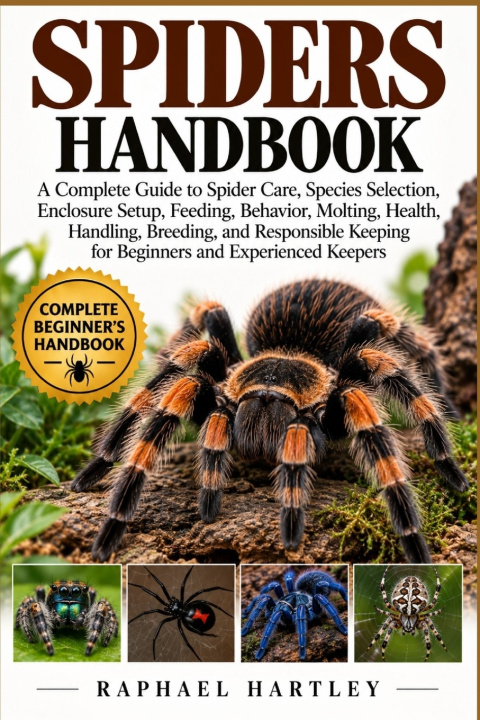
SPIDERS HANDBOOK
A Complete Guide to Spider Care, Species Selection, Enclosure Setup, Feeding, Behavior, Molting, Health, Handling, Breeding, and Responsible Keeping for Beginners and Experienced Keepers
 Englisch
 36 b
36 b
 Neu
Neu
Bis zu 30 Tage Rückgaberecht

Discover the fascinating world of spiders and learn how to provide responsible, species-appropriate care with practical guidance on selection, enclosure design, feeding, behavior, molting, health, handling, breeding, and long-term husbandry.
SPIDERS HANDBOOK is a complete guide for beginners, experienced arachnid keepers, breeders, educators, and enthusiasts who want to better understand these extraordinary animals. Raphael Hartley combines essential spider biology with practical husbandry principles to help readers create suitable environments, recognize natural behavior, avoid common mistakes, and keep spiders responsibly.
Spiders are an incredibly diverse group of arachnids, ranging from active hunters and burrowers to highly specialized web builders. Because their environmental and behavioral requirements differ significantly among species, successful keeping begins with accurate identification and careful research.
Inside this handbook, you'll discover:
• Spider anatomy, natural history, senses, life cycles, and remarkable adaptations
• How to research and choose species suitable for your experience and available space
• Selecting healthy captive-bred spiders from responsible sources
• Understanding terrestrial, arboreal, burrowing, and web-building lifestyles
• Choosing secure enclosures with appropriate dimensions and ventilation
• Selecting substrates, hides, climbing structures, anchor points, and other furnishings
• Managing species-appropriate temperature, humidity, airflow, and moisture
• Choosing suitable live prey and establishing appropriate feeding schedules
• Hydration, water provision, prey management, and avoiding overfeeding
• Understanding hunting, web building, hiding, defensive behavior, and activity patterns
• Recognizing premolt behavior and preparing the enclosure for safe molting
• Why spiders should not be disturbed or fed during vulnerable stages of the molt
• Monitoring body condition, movement, appetite, limbs, abdomen, and overall appearance
• Maintaining enclosure hygiene and controlling mold, mites, waste, and uneaten prey
• Recognizing injuries, abnormal behavior, dehydration, and environmental problems
• Safe maintenance techniques designed to minimize unnecessary direct handling
• Understanding venom, defensive responses, escape risks, and household safety
• Sex differences, maturity, courtship, mating, and responsible breeding preparation
• Egg sac production, maternal behavior, incubation, and spiderling development
• Preparing appropriate housing and food for growing spiderlings
• Preventing accidental escapes during feeding, cleaning, and transfers
• Record keeping for feeding, molts, growth, breeding, egg sacs, and health observations
• Responsible breeding, sale, transfer, and long-term ownership
SPIDERS HANDBOOK emphasizes that direct handling is usually unnecessary and may create risks for both the keeper and the spider. Venom significance, defensive behavior, speed, fragility, and escape ability vary by species. Hands-off observation and careful enclosure-management techniques are generally the safest approach.
Responsible ownership also begins before acquisition. Keepers should research adult size, lifespan, environmental requirements, venom significance, local regulations, food availability, and long-term housing needs before choosing any species.
Whether you are preparing for your first spider, improving an existing enclosure, learning about molting, raising spiderlings, or exploring responsible breeding, this handbook provides a dependable foundation.
Choose species wisely, create appropriate habitats, understand natural behavior, manage feeding and molts confidently, and enjoy the fascinating world of spiders through knowledgeable and responsible keeping.


Informationen zum Buch
Englisch

Verschenken Sie dieses Buch noch heute
Es ist ganz einfach
1 Legen Sie das Buch in Ihren Warenkorb und wählen Sie den Versand als Geschenk 2 Wir schicken Ihnen umgehend einen Gutschein 3 Das Buch wird an die Adresse des beschenkten Empfängers geliefertHallo! Ich bin Libroamiko, dein Buchberater.
Wie kann ich dir helfen?