
 Kontakt
 Wie einkaufen
Versand
Kaufberater
 Englisch
 40 b
40 b
 Demnächst
 Neu
Neu
Bis zu 30 Tage Rückgaberecht

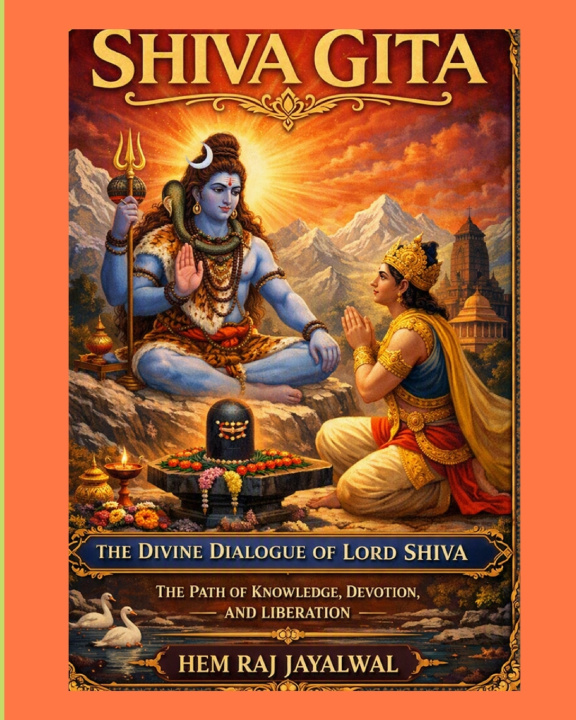
SHIVA GITA
THE DIVINE DIALOGUE OF LORD SHIVA
SHIVA GITA: THE WISDOM OF LORD SHIVA is an exploration of spiritual knowledge, self-realization, and liberation through the teachings traditionally attributed to Lord Shiva in his dialogue with Lord Rama. Rooted in the broader Ramayana and Hindu philosophical traditions, the book presents the Shiva Gita as a profound inquiry into the fundamental questions of human existence: Who am I? What is the nature of Reality? Why do human beings suffer? What is the relationship between the individual soul and the Supreme? Why are we bound by desire, fear, ego and attachment? And how can genuine freedom be attained?
The book begins by establishing the divine setting of the teaching. Rama, confronted with profound spiritual questions, becomes not merely a heroic figure but a sincere seeker of truth. His questions represent the universal human search for meaning, purpose and freedom. The appearance of Lord Shiva introduces the central revelation of the work: behind the changing world lies an eternal Reality that cannot be fully grasped through ordinary perception or intellectual speculation alone.
The discussion then turns toward Brahman, the Absolute Reality. The book examines the relationship between the formless and the manifest, consciousness and existence, and the traditional concept of Sat-Chit-Ananda-being, consciousness and bliss. It explores creation, the five elements, cosmic evolution and the role of Maya, while explaining how the individual soul, or Atman, becomes entangled in ignorance, Karma and rebirth.
A major portion of the book is devoted to the path of liberation. Four complementary dimensions of spiritual practice are explored: Jnana Yoga, Bhakti Yoga, Dhyana Yoga and Karma Yoga. Jnana encourages self-inquiry and discrimination between the eternal and temporary. Bhakti emphasizes love, surrender, prayer and divine grace. Meditation develops concentration, silence and awareness. Karma Yoga transforms ordinary duties into spiritual practice through selfless action and renunciation of attachment to results.
The book also examines the nature of the mind and the psychological roots of suffering. Desire, anger, greed, pride, fear and attachment are explored as forces that disturb inner peace. Rather than simply suppressing these tendencies, Shiva's wisdom encourages awareness, discrimination, detachment and transformation. The reader is introduced to the idea of witness consciousness-the ability to observe thoughts and emotions without becoming completely identified with them.
Karma receives special attention. The book examines the law of cause and effect, good and bad actions, destiny and free will, and the possibility of freedom from karmic bondage. Dharma is presented not merely as an external duty but as a principle of responsible and ethical living. The qualities of the wise-including humility, compassion, fearlessness, equanimity and self-mastery-are presented as practical expressions of spiritual realization.
The book then explores the glory and symbolism of Lord Shiva. Shiva is presented as Supreme Lord, Great Yogi, Cosmic Dancer, and Destroyer of ignorance and Eternal Guru. Sacred symbols such as the Shiva Linga, Trishula, Third Eye, Crescent Moon, and Ganga, serpent, ashes and Damaru are interpreted as expressions of deeper spiritual principles. Important Shiva mantras, including Om Namah Shivaya and the Mahamrityunjaya Mantra, are introduced within their devotional and contemplative context.
The teachings are brought into contemporary life through discussions of family, work, responsibility, social compassion, ethical leadership, stress, purpose and inner transformation. The book emphasizes that spirituality does not require withdrawal from life. Instead, wisdom can transform the way one works, relates to others, responds to difficulties and understands oneself.<...


Informationen zum Buch
Englisch
