
 Kontakt
 Wie einkaufen
Versand
Kaufberater
 Englisch
 146 b
146 b
30 Tage für die Rückgabe der Ware
Kunden kauften auch








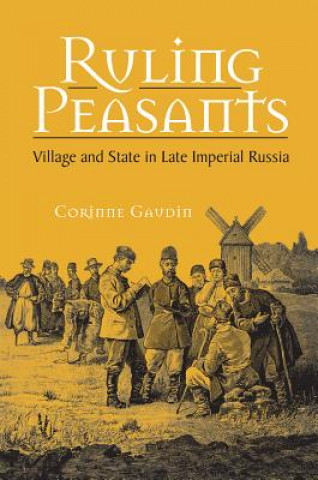
Who ruled the countryside in late Imperial Russia? On the rare occasions that tsarist administrators dared pose the question so boldly, their discouraged answer was that peasants ruled. Historians have largely echoed this assessment, pointing to the state's failure to penetrate rural society as a key reason for the tsarist government's collapse. "Ruling Peasants" challenges this dominant paradigm of the closed village by investigating the ways peasants engaged tsarist laws and the local institutions that were created in a series of contradictory legal, administrative, and agrarian reforms from the late 1880s to the eve of World War I. Gaudin's analysis of the practices of village assemblies, local courts, and elected peasant elders reveals a society riven by dissension. As villagers argued among themselves in terms defined by a distant government, the peasants and their communities were transformed. Key concepts such as 'custom,' 'commune,' 'property,' and 'fairness' were forged in such dialogue between the rulers and the ruled. By the end of the 19th century, the framework of dialogue between the peasants and the state no longer worked. The more peasants used the institutions and laws available to them, the more they solicited the authorities and the greater the obstacles to communication grew. Villagers' rising expectations for assistance foundered in the face of inconsistent state policies and arbitrary legal responses. Ironically, the success of often contradictory reforms - a success unrecognized by administrators themselves - contributed to undermining the state's legitimacy.


Informationen zum Buch
Englisch
Kategorie

Verschenken Sie dieses Buch noch heute
Es ist ganz einfach
1 Legen Sie das Buch in Ihren Warenkorb und wählen Sie den Versand als Geschenk 2 Wir schicken Ihnen umgehend einen Gutschein 3 Das Buch wird an die Adresse des beschenkten Empfängers geliefertDas könnte Sie auch interessieren


 /
/
 Broschur
 25.29
€
25.29
€

 /
Broschur
13.69
€
/
Broschur
13.69
€



 /
Broschur
12.69
€
/
Broschur
12.69
€
 /
Broschur
25.89
€
/
Broschur
25.89
€



Hallo! Ich bin Libroamiko, dein Buchberater.
Wie kann ich dir helfen?