
 Kontakt
 Wie einkaufen
Versand
Kaufberater
Quest for Voice
 Englisch
 311 b
311 b
Bis zu 30 Tage Rückgaberecht
Kunden kauften auch

 /
/
 Broschur
 40.99
€
40.99
€

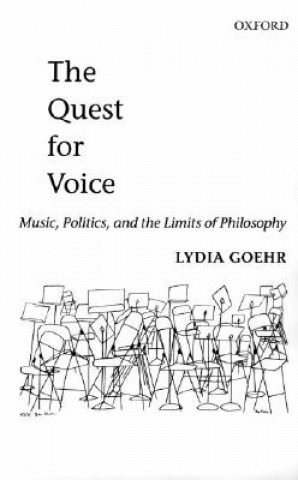
What is musical meaning? Where does it reside and how can it be known? Does it make a difference to its meaning if the music is composed with or without words, as a symphony or a song? Why is it claimed that music can express human feelings with an immediacy not possible in other languages or arts? What is contained in the claim that music is autonomous, or that it is prophetic and can articulate a 'politics for the future'? Concentrating on the music, politics, and philosophy of Richard Wagner, Lydia Goehr addresses these classic questions of German Romanticism. On the way, she offers an account of the peculiar relation that was established between philosophy and music in the nineteenth century; a philosophical and political reading of Wagner's opera Die Meistersinger; an account of the Wagner-Hanslick debate on musical formalism; an argument for resituating musical autonomy, in the spirit of Wagner's Gesamtkunstwerk; an account of the competing performance ideals embodied in Wagner's Bayreuth, and an interpretation of Wagner's legacy as experienced by composers exiled from Nazi Germany. Goehr's historical and musicological enquiries are unified by a philosophical study of the impact of the transcendental or critical perspective on philosophical theory. She argues that philosophy needs to take its limits seriously to accommodate the primacy of music's practice.


Informationen zum Buch
Englisch
Kategorie

Verschenken Sie dieses Buch noch heute
Es ist ganz einfach
1 Legen Sie das Buch in Ihren Warenkorb und wählen Sie den Versand als Geschenk 2 Wir schicken Ihnen umgehend einen Gutschein 3 Das Buch wird an die Adresse des beschenkten Empfängers geliefertDas könnte Sie auch interessieren









Hallo! Ich bin Libroamiko, dein Buchberater.
Wie kann ich dir helfen?