Kontakt
 Wie einkaufen
Versand
Kaufberater
 Englisch
 577 b
577 b
Bis zu 30 Tage Rückgaberecht
Kunden kauften auch










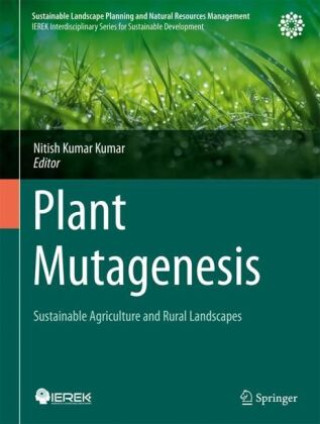
This book emphasizes recent developments in the use of mutation technologies for crop plant improvement and, ultimately, sustainable development. Plant breeders use genetic variation, which is created by plant-induced mutation, to create new and improved cultivars. The development of improved cultivars is a productive and optimistic agricultural strategy for economic and environmental sustainability since it ensures high yield stability, enhances soil health, and poses no environmental risks. Understanding mutation induction and exploring its uses have paved the road for improving genetic diversity for different plants and agronomic features and advanced gene discovery for diverse qualities that aid in sustainable development. Plant mutation breeding imitates spontaneous mutation, the primary force driving evolution, by using a plant's own genetic resources instead of genetic transformation. In order to develop beneficial agricultural features, this strategy focuses on the application of various chemical and physical mutagens in conjunction with biotechnologies. In order to survive in challenging environments, increase nutritional value, fight diseases and pests, grow in salty soils, and utilize water and nutrients more effectively, new varieties of plants are developed.This approach has significantly boosted the economies of nations like China, India, Japan, Pakistan, and the USA. As of right now, the strategy has produced and disseminated more than 3600 mutant types in the majority of crop plants, having a significant economic impact. This book discusses several mutation induction techniques, mutant screening, genome editing, the haploid breeding system for mutations, as well as genomic developments, and mutant gene identification. Plant breeders, researchers, and students in the fields of plant sciences, agriculture, and food science will find this instructive book to be of great help.


Informationen zum Buch
Englisch

Verschenken Sie dieses Buch noch heute
Es ist ganz einfach
1 Legen Sie das Buch in Ihren Warenkorb und wählen Sie den Versand als Geschenk 2 Wir schicken Ihnen umgehend einen Gutschein 3 Das Buch wird an die Adresse des beschenkten Empfängers geliefertDas könnte Sie auch interessieren




 /
/
 MP3
MP3
 15.79
€
15.79
€


 /
/
 Broschur
16.39
€
Broschur
16.39
€