
 Kontakt
 Wie einkaufen
Versand
Kaufberater
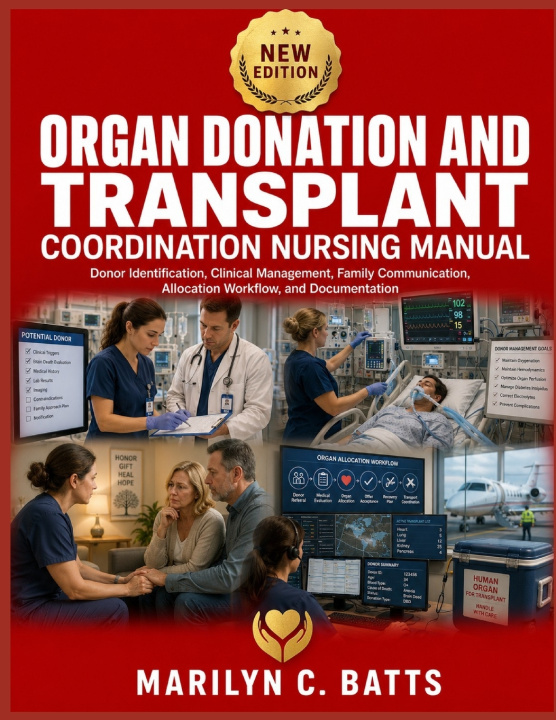
Organ Donation and Transplant Coordination Nursing Manual
Donor Identification, Clinical Management, Family Communication, Allocation Workflow, and Documentation
 Englisch
 278 b
278 b
 Demnächst
 Neu
Neu
Bis zu 30 Tage Rückgaberecht

Build confidence across the full organ donation and transplant coordination pathway.
Organ Donation and Transplant Coordination Nursing Manual is a practical clinical reference for nurses, coordinators, and multidisciplinary professionals who need a clear, organized understanding of donation and transplantation workflows from initial donor identification through recipient activation, recovery coordination, documentation, and quality improvement.
Designed for both structured learning and rapid clinical reference, this manual connects bedside assessment with the operational decisions that follow. Readers are guided through donor referral and early evaluation, determination-of-death pathways, physiologic donor management, donation after circulatory death, family communication and authorization, infectious-risk review, organ suitability, allocation and organ-offer workflow, operating-room recovery, chain of custody, organ-specific considerations, tissue and eye donation, transplant recipient activation, ethical and privacy responsibilities, emergency readiness, and program-level performance improvement.
Each chapter emphasizes clinical judgment, communication discipline, escalation, documentation, and safe coordination across complex multidisciplinary systems. Practical features include Clinical Pearls, Red Flag Alerts, Documentation Points, case-based scenarios, workflow checklists, review questions, and operational tools that help readers recognize where precision matters most.
The manual also includes five practical appendices covering donor referral, donor management trend review, allocation and organ-offer communication, recovery and chain of custody, and recipient preoperative readiness, plus an expanded glossary and clinical/operational index for quick reference.
Topics include: donor identification and referral; brain-death and circulatory-death donation pathways; hemodynamic and ventilatory donor management; family communication and grief-sensitive coordination; infectious-risk assessment; allocation and matching workflow; organ offer communication; procurement and recovery coordination; transport and chain of custody; tissue and eye donation; recipient activation; ethical, legal, privacy, and documentation responsibilities; critical-event management; staff well-being; and program quality improvement.
This book is intended as an educational and professional-practice resource. It does not replace institutional policy, organ procurement organization procedures, transplant-center protocols, medical direction, jurisdiction-specific requirements, or individualized clinical judgment.


Informationen zum Buch
Englisch
