
 Kontakt
 Wie einkaufen
Versand
Kaufberater
 Englisch
 30 b
30 b
 Neu
Neu
Bis zu 30 Tage Rückgaberecht

How do you grieve someone who is still alive?
There are funerals for the dead. There are sympathy cards, casseroles, flowers, and rituals that tell us what grief is supposed to look like.
But what happens when the person you're grieving is still out there somewhere?
Still breathing.
Still capable of calling.
Still loved.
And yet somehow no longer the person you remember.
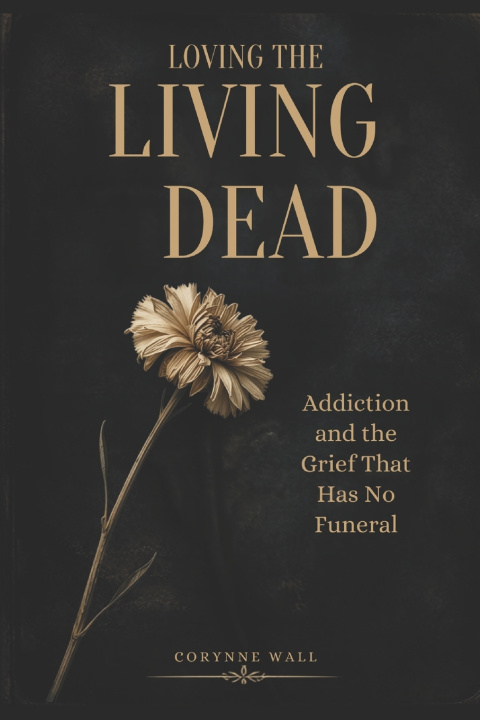
In Loving the Living Dead: Addiction and the Grief That Has No Funeral, Corynne Wall writes from inside one of the most complicated forms of loss: loving someone through long-term addiction while grieving who they used to be.
Her person is her younger brother, Bryant-once her best friend, partner in trouble, protector, class clown, musician, and beloved uncle. As their lives moved in different directions, addiction eventually led him through homelessness, incarceration, overdoses, hospitalizations, treatment, relapse, and long periods of disappearance.
For years, Corynne has lived between two realities: desperately hoping her brother will recover while quietly preparing herself for the possibility that he won't.
She even wrote his eulogy.
He is still alive.
Part personal story and part compassionate guidance, Loving the Living Dead explores the experiences families often struggle to admit out loud:
The guilt of having a good life while someone you love is suffering.
The difference between helping and enabling.
Setting boundaries that feel painfully similar to abandonment.
Loving someone you no longer trust.
Being angry at someone you're terrified to lose.
Feeling relief when they're in jail or treatment because, for once, you know where they are.
Waiting for the phone call that could change everything.
And learning that loving someone does not give you the power to save them.
This is not a book about how to get someone sober.
There is no formula here for fixing addiction, forcing recovery, or finding the perfect boundary that will finally make someone change.
Instead, this book is for the people standing on the other side of addiction-the parents, siblings, spouses, children, friends, and loved ones trying to figure out how to keep loving someone without disappearing alongside them.
It is about ambiguous loss. Anticipatory grief. Hope. Anger. Guilt. Trust. Boundaries. And the painful work of continuing your own life while someone else's story remains unresolved.
Most of all, it is a reminder:
You are allowed to love them.
You are allowed to grieve them.
And you are allowed to keep living.
You do not have to wait for their recovery before beginning your own.
From me to you: you are not alone in the grief that has no funeral.


Informationen zum Buch
Englisch
