
 Kontakt
 Wie einkaufen
Versand
Kaufberater
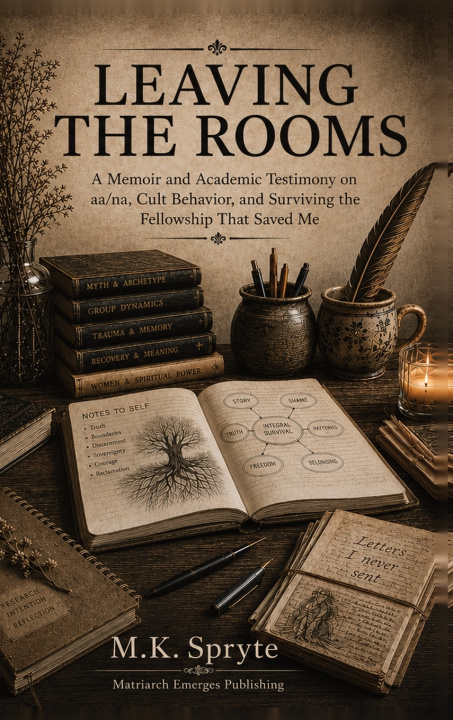
Leaving the Rooms
A Memoir and Academic Testimony on aa/na, Cult Behavior and Survivng the Fellowship that Saved Me
 Englisch
 68 b
68 b
 Demnächst
 Neu
Neu
 Veröffentlichung 27. 08. 2026
Bis zu 30 Tage Rückgaberecht

Leaving the Rooms is a memoir and academic testimony about recovery culture, trauma, power, and what it costs to walk away from a fellowship that once helped save a life.
After seven years inside aa/na, M.K. Spryte left the rooms in 2015. She did not relapse. She did not die. She did not lose her mind. She lived.
This book begins there.
Written from lived experience, scholarship, and survivor testimony, Leaving the Rooms examines the complicated truth of aa/na recovery culture. Spryte does not deny that the rooms helped her. She honors the people who loved her, sat with her, made coffee, offered rides, and helped keep her alive when her life was wreckage. But she also refuses to stay silent about the harm, fear, hierarchy, spiritual pressure, sponsor control, trauma dumping, misogyny, and institutional loyalty she witnessed inside the same spaces.
This is not a simple attack on recovery. It is not a clean break between good and bad. It is a harder truth.
A place can help save your life and still become a cage.
Blending memoir, psychology, anthropology, cultural criticism, trauma analysis, and plain-language academic testimony, Spryte explores the cultic and high-control features that can appear inside recovery fellowships when vulnerable people are taught that leaving means relapse, jail, insanity, death, ego, pride, or spiritual failure. She examines sponsorship, confession without clinical protection, clean-time hierarchy, sacred-text thinking, the white-god lie, patriarchal recovery culture, and the way systems can contain good people while still producing harm.
Leaving the Rooms is also a survival map. It follows Spryte from Wisconsin recovery rooms to Penn State, therapy, scholarship, grief work, and the larger Matriarch Universe she began building through books, music, and testimony. It asks what recovery becomes after recovery culture. It asks what healing looks like when a survivor stops allowing the group to define her mind, her body, her spirit, or her future.
This book is for people who were helped and harmed in the same rooms.
It is for the person who got clean but still felt controlled.
It is for the survivor who confessed pieces of their life to sponsors but never felt safe enough to tell the whole truth.
It is for the person who left and was told they would not make it.
It is for the one who is still sitting in the back of the room wondering whether freedom is allowed.
Leaving the Rooms is not revenge.
It is release.


Informationen zum Buch
Englisch

Verschenken Sie dieses Buch noch heute
Es ist ganz einfach
1 Legen Sie das Buch in Ihren Warenkorb und wählen Sie den Versand als Geschenk 2 Wir schicken Ihnen umgehend einen Gutschein 3 Das Buch wird an die Adresse des beschenkten Empfängers geliefertHallo! Ich bin Libroamiko, dein Buchberater.
Wie kann ich dir helfen?