
 Kontakt
 Wie einkaufen
Versand
Kaufberater
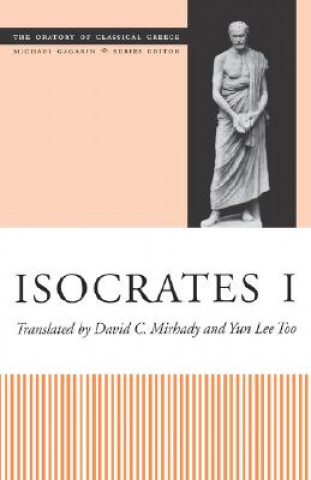
Isocrates I
 Englisch
 82 b
82 b
Bis zu 30 Tage Rückgaberecht
Kunden kauften auch








 /
/
 Hardcover
 32.29
€
32.29
€





 /
Broschur
22.79
€
/
Broschur
22.79
€








This is the fourth volume in the "Oratory of Classical Greece" series. Planned for publication over several years, the series will present all of the surviving speeches from the late fifth and fourth centuries B.C. in new translations prepared by classical scholars who are at the forefront of the discipline. These translations are especially designed for the needs and interests of today's undergraduates, Greekless scholars in other disciplines, and the general public. "Classical Oratory" is an invaluable resource for the study of ancient Greek life and culture. The speeches offer evidence on Greek moral views, social and economic conditions, political and social ideology, and other aspects of Athenian culture that have been largely ignored: women and family life, slavery, and religion, to name just a few.This volume contains works from the early, middle, and late career of the Athenian rhetorician Isocrates (436-338). Among the translated works are his legal speeches, pedagogical essays, and his lengthy autobiographical defense, Antidosis. In them, he seeks to distinguish himself and his work, which he characterizes as 'philosophy', from that of the sophists and other intellectuals such as Plato. Isocrates' identity as a teacher was an important mode of political activity, through which he sought to instruct his students, foreign rulers, and his fellow Athenians. He was a controversial figure who championed a role for the written word in fourth-century politics and thought. Isocrates' speeches are introduced and translated by David C. Mirhady, Assistant Professor in the Department of Humanities at Simon Fraser University, and Yun Lee Too, Assistant Professor of Classics at Columbia University.


Informationen zum Buch
Englisch
Kategorie

Verschenken Sie dieses Buch noch heute
Es ist ganz einfach
1 Legen Sie das Buch in Ihren Warenkorb und wählen Sie den Versand als Geschenk 2 Wir schicken Ihnen umgehend einen Gutschein 3 Das Buch wird an die Adresse des beschenkten Empfängers geliefertDas könnte Sie auch interessieren
 /
Broschur
14.59
€
/
Broschur
14.59
€



 /
Broschur
5.79
€
/
Broschur
5.79
€










 /
Broschur
11.69
€
/
Broschur
11.69
€


Hallo! Ich bin Libroamiko, dein Buchberater.
Wie kann ich dir helfen?