
 Kontakt
 Wie einkaufen
Versand
Kaufberater
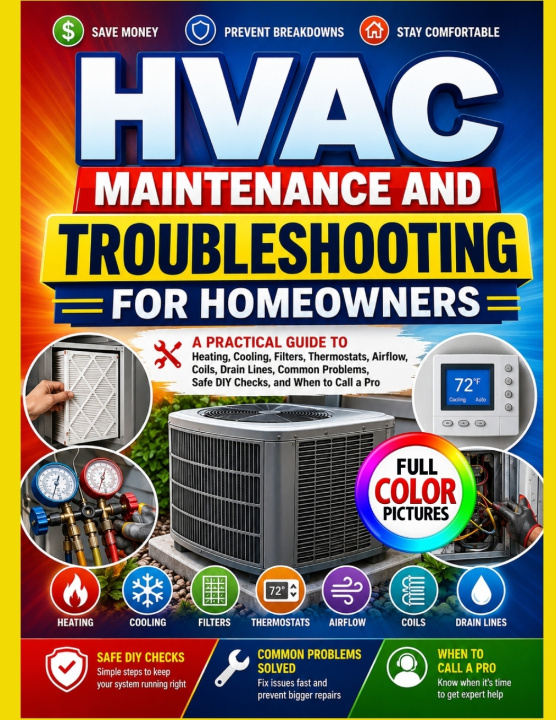
HVAC MAINTENANCE AND TROUBLESHOOTING FOR HOMEOWNERS
A Practical Guide to Heating, Cooling, Filters, Thermostats, Airflow, Coils, Drain Lines, Common Problems, Safe DIY Checks, and When to Call a Pro
 Englisch
 34 b
34 b
 Neu
Neu
Bis zu 30 Tage Rückgaberecht

Your heating or cooling system has stopped working properly-but is the cause a simple filter problem, an incorrect thermostat setting, restricted airflow, a clogged drain, or something requiring an HVAC technician?
Without a logical troubleshooting process, homeowners can waste time, replace unnecessary parts, repeatedly reset equipment, or overlook warning signs of a more serious problem.
HVAC Maintenance and Troubleshooting for Homeowners teaches beginners how to investigate common heating and cooling symptoms using safe observations and straightforward checks.
Instead of turning you into an unlicensed technician, this guide helps you understand what your system is doing, eliminate simple causes, recognize hazardous conditions, and communicate more effectively with a qualified professional.
Inside, you will learn how to:
• Understand the operating sequence of common furnaces, central air conditioners, heat pumps, and ductless systems.
• Begin every investigation safely by identifying hazards and knowing which components homeowners should never open, test, bypass, or repair.
• Check thermostat modes, schedules, batteries, temperature settings, and basic controls before assuming the equipment has failed.
• Investigate an air conditioner that runs but does not cool by checking accessible airflow and operating conditions.
• Respond when a furnace will not heat or produces inconsistent warmth without interfering with combustion or gas components.
• Identify common causes of weak airflow and uneven room temperatures involving filters, closed registers, blocked returns, accessible ducts, and blower-related warning signs.
• Understand short cycling, continuous operation, delayed starting, and unusually long run times.
• Recognize possible frozen-coil conditions and avoid actions that could damage the system.
• Investigate condensate leaks and clogged drain-line symptoms before water damages ceilings, floors, walls, or equipment.
• Understand common heat-pump behaviors including icing, defrost cycles, auxiliary heat, and declining performance during extreme weather.
• Interpret unusual noises and odors and distinguish between minor observations and reasons to shut the equipment down.
• Respond appropriately to tripped breakers without repeatedly resetting a circuit that may have an electrical fault.
• Document symptoms systematically including temperatures, sounds, odors, error codes, weather conditions, and operating patterns.
• Know when professional service is necessary for refrigerant leaks, electrical failures, combustion problems, damaged wiring, motors, capacitors, compressors, gas odors, or persistent faults.
Whether your system is not heating, not cooling, leaking water, icing over, cycling constantly, or simply behaving differently, this guide will help you approach the problem calmly and logically.
Stop guessing. Learn what you can safely check, what the symptoms may indicate, and when it is time to call an HVAC professional.


Informationen zum Buch
Englisch
Kategorie

Verschenken Sie dieses Buch noch heute
Es ist ganz einfach
1 Legen Sie das Buch in Ihren Warenkorb und wählen Sie den Versand als Geschenk 2 Wir schicken Ihnen umgehend einen Gutschein 3 Das Buch wird an die Adresse des beschenkten Empfängers geliefertHallo! Ich bin Libroamiko, dein Buchberater.
Wie kann ich dir helfen?