
 Kontakt
 Wie einkaufen
Versand
Kaufberater
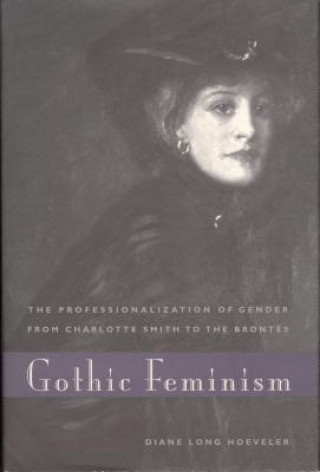
Gothic Feminism
The Professionalization of Gender from Charlotte Smith to the Brontes
 Englisch
 104 b
104 b
Bis zu 30 Tage Rückgaberecht
Kunden kauften auch



As British women writers in the late eighteenth and early nineteenth centuries sought to define how they experienced their era's social and economic upheaval, they helped popularize a new style of bourgeois female sensibility. Building on her earlier work in Romantic Androgyny, Diane Long Hoeveler now examines the Gothic novels of Charlotte Smith, Ann Radcliffe, Jane Austen, Charlotte Dacre Byrne, Mary Shelley, and the Brontës to show how these writers helped define femininity for women of the British middle class. Hoeveler argues that a female-created literary ideology, now known as "victim feminism," arose as the Gothic novel helped create a new social role of professional victim for women adjusting to the new bourgeois order. These novels were thinly disguised efforts at propagandizing a new form of conduct for women, teaching that "professional femininity"-a cultivated pose of wise passiveness and controlled emotions-best prepared them for social survival. She examines how representations of both men and women in these novels moved from the purely psychosexual into social and political representations, and how these writers constructed a series of ideologies that would allow their female characters-and readers-fictitious mastery over an oppressive social and political system. Gothic Feminism takes a neo-feminist approach to these women's writings, treating them not as sacred texts but as thesis-driven works that attempted to instruct women in a series of strategic poses. It offers both a new understanding of the genre and a wholly new interpretation of feminism as a literary ideology.


Informationen zum Buch
Englisch

Verschenken Sie dieses Buch noch heute
Es ist ganz einfach
1 Legen Sie das Buch in Ihren Warenkorb und wählen Sie den Versand als Geschenk 2 Wir schicken Ihnen umgehend einen Gutschein 3 Das Buch wird an die Adresse des beschenkten Empfängers geliefertDas könnte Sie auch interessieren




Hallo! Ich bin Libroamiko, dein Buchberater.
Wie kann ich dir helfen?