
 Kontakt
 Wie einkaufen
Versand
Kaufberater
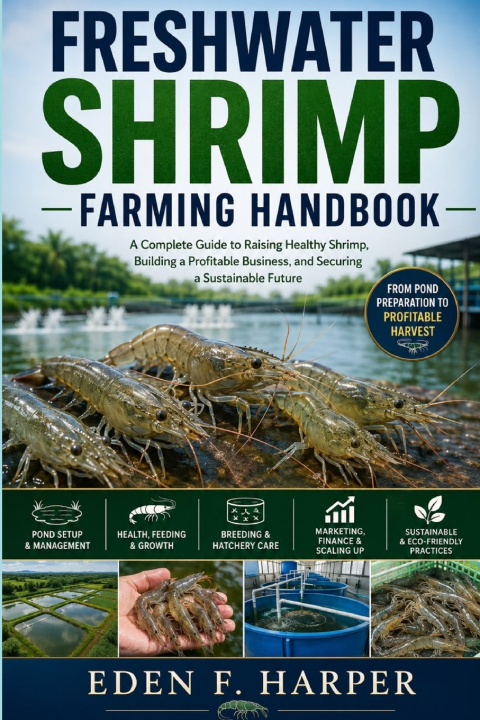
FREASHWATER SHRIMP FARMING HANDBOOK
A COMPLETE GUIDE TO RAISING HEALTHY SHRIMP, BUILDING A PROFITABLE BUSINESS AND SECURING A SUSTAINABLE FUTIRE
 Englisch
 32 b
32 b
 Neu
Neu
Bis zu 30 Tage Rückgaberecht

Discover the practical foundations of freshwater shrimp farming and learn how to build a healthy, productive, and sustainable shrimp-growing operation from the ground up.
Freshwater Shrimp Farming Handbook is a practical guide for beginners, aspiring aquaculture entrepreneurs, small-scale farmers, and experienced producers who want to develop their understanding of freshwater shrimp production. From selecting suitable species and preparing a production system to managing water quality, feeding, growth, health, harvesting, and business operations, this book provides a structured approach to modern freshwater shrimp farming.
Successful shrimp farming is not simply about putting shrimp into water and waiting for them to grow. Healthy production depends on careful preparation, suitable environmental conditions, consistent observation, good feeding practices, effective biosecurity, responsible stocking, and proper farm management.
This guide brings these essential principles together to help readers make better-informed decisions throughout the production cycle.
Build a Strong Foundation in Freshwater Shrimp FarmingUnderstanding the biology and environmental requirements of shrimp is the first step toward successful production.
Inside this handbook, you will learn about:
• The fundamentals of freshwater shrimp farming and aquaculture
• Important characteristics of commonly farmed freshwater shrimp
• Selecting suitable shrimp species for your production goals
• Choosing an appropriate location for a shrimp farming operation
• Designing ponds, tanks, containers, and other production systems
• Preparing water and establishing suitable growing conditions
• Understanding water quality and why it matters to shrimp health
• Monitoring important water parameters and maintaining stable conditions
• Stocking density and responsible stocking practices
• Acclimating shrimp before introducing them into a production system
• Feeding strategies for different stages of shrimp growth
• Choosing and managing appropriate feeds
• Reducing feed waste and improving feeding efficiency
• Understanding shrimp growth, molting, and development
• Recognizing signs of stress and poor environmental conditions
• Common health challenges and practical prevention strategies
• Farm hygiene, biosecurity, and disease-risk management
• Maintaining healthy production systems through routine observation
• Harvesting shrimp efficiently and handling them appropriately
• Basic post-harvest management and product quality considerations
• Record keeping and monitoring farm performance
• Managing operating costs and production expenses
• Understanding profitability and basic farm economics
• Marketing freshwater shrimp and identifying potential customers
• Scaling a small operation into a larger enterprise
• Sustainable water, feed, and resource management
• Common beginner mistakes and how to avoid them
Water is the production environment in shrimp farming, making water quality one of the most important factors in successful culture.
Shrimp can be sensitive to sudden environmental changes, so farmers need to understand the relationship between water conditions, stocking density, feeding, waste accumulation, and animal health.
This book introduces the key principles of water management and explains why regular monitoring, appropriate aeration, responsible feeding, and good system maintenance can contribute to a more stable production environment.


Informationen zum Buch
Englisch

Verschenken Sie dieses Buch noch heute
Es ist ganz einfach
1 Legen Sie das Buch in Ihren Warenkorb und wählen Sie den Versand als Geschenk 2 Wir schicken Ihnen umgehend einen Gutschein 3 Das Buch wird an die Adresse des beschenkten Empfängers geliefertHallo! Ich bin Libroamiko, dein Buchberater.
Wie kann ich dir helfen?