
 Kontakt
 Wie einkaufen

Versand
Kaufberater
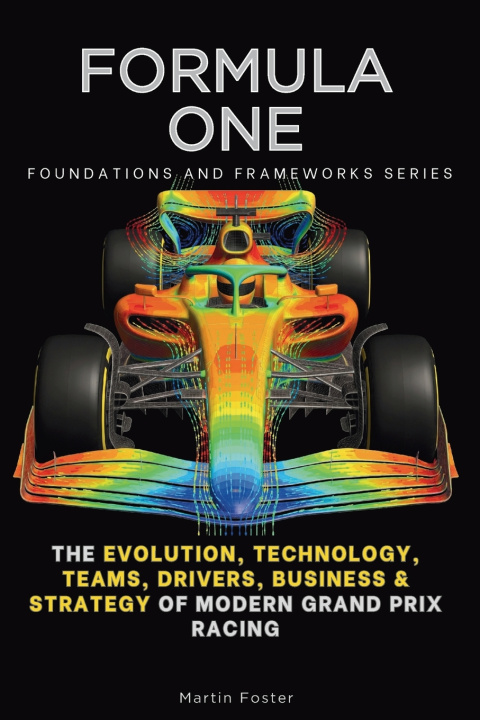
Formula One
The Evolution, Technology, Teams, Drivers, Business & Strategy of Modern Grand Prix Racing
 Englisch
 39 b
 Neu
Bis zu 30 Tage Rückgaberecht

Formula One makes sense once someone shows you what you are looking at. This book explains the cars, the teams, the race strategy, and the money behind modern Grand Prix racing in plain language, with no engineering background needed.
The 2026-2030 regulations reset almost everything at once. A new engine formula splits power roughly evenly between combustion and electric, the cars changed shape under new aerodynamic rules, and Audi and Cadillac pushed the grid to eleven teams and twenty-two cars.
This book starts from the ground up and builds a full picture of how the sport works, on track and behind it.
Twelve chapters break the sport apart:
- What separates F1 from IndyCar, Formula E, and endurance racing, how the two championships run side by side, and what happens across a weekend from Friday practice to the Sunday podium
- A century of racing history covered without turning into a lecture: city-to-city road races, Cooper putting the engine behind the driver, the arrival of wings, ground effect, and the FISA-FOCA fight over who owned the sport
- Carbon fiber monocoque construction, venturi tunnels, porpoising, DRS, and the 2026 movable aero rules
- Turbo hybrid architecture, energy recovery and deployment, lift-and-coast, fully sustainable fuel made without a drop of crude oil, and why thermal degradation and the tire operating window decide more races than horsepower does
- All eleven teams on the grid, one at a time, from Ferrari's political churn at Maranello to Cadillac building an entire operation from an empty building
- Who does what inside a team: race engineers, strategists, the mission control room, and the freight operation that packs a racing team into crates two dozen times a season
- Safety engineering and circuit design: the survival cell, crash testing, the halo, TecPro barriers, and how corner sequence determines whether overtaking is possible
- The driver ladder from karting at age six through Formula 4, F3, and F2, superlicense points, neck training, contracts, and team orders
- Stint modeling, the undercut, the overcut, the free pit stop under a safety car, and how live telemetry turns into a call made hundreds of miles from the track
- Who owns F1, how the prize fund gets divided, and what the budget cap changed for everyone
Written for:
- The newcomer who got hooked on F1 by social media or streaming series and hit a wall of jargon
- For the longtime viewer who wants a deeper understanding of the engineering, strategy, history, or business side.
- Students of motorsport engineering and business will find the structure useful as well.
Reference material sits at the back: a historical timeline running from the first road races through the modern championship, a plain-language glossary of terms, example responses to the end-of-chapter questions, and a list of further reading and viewing.
Read it cover to cover and the next race looks different. The smooth, easy-looking laps turn into what they actually are, the visible sliver of an enormous operation chasing tenths of a second.


Informationen zum Buch
Englisch

Verschenken Sie dieses Buch noch heute
Es ist ganz einfach
1 Legen Sie das Buch in Ihren Warenkorb und wählen Sie den Versand als Geschenk 2 Wir schicken Ihnen umgehend einen Gutschein 3 Das Buch wird an die Adresse des beschenkten Empfängers geliefertHallo! Ich bin Libroamiko, dein Buchberater.
Wie kann ich dir helfen?