
 Kontakt
 Wie einkaufen
Versand
Kaufberater
 Englisch
 59 b
59 b
 Demnächst
 Neu
Neu
Bis zu 30 Tage Rückgaberecht

What does it really take to challenge Boeing and Airbus?
Bombardier proved that building an excellent airplane was only the beginning.
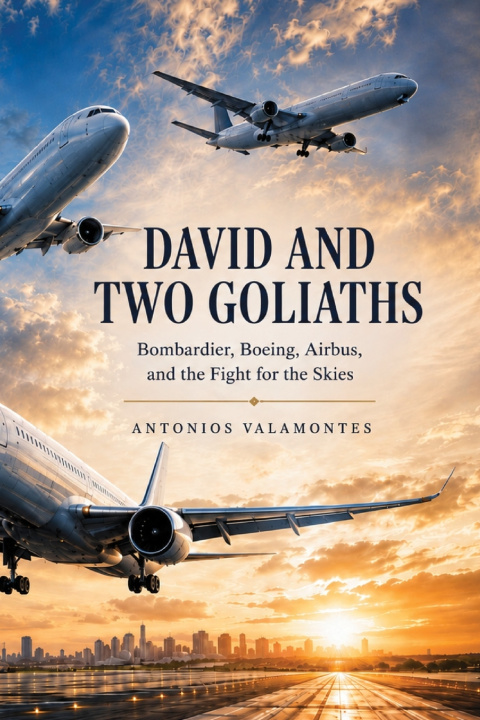
David and Two Goliaths traces the extraordinary rise, struggle, and transformation of Canada's commercial aerospace ambitions-from the Avro Jetliner and CF-105 Arrow through Canadair, de Havilland, the CRJ revolution, and Bombardier's audacious clean-sheet CSeries.
The CSeries was technologically advanced, fuel-efficient, quiet, and aimed at a genuine opening in the commercial-aircraft market. It earned certification, entered airline service, and attracted major customers. Yet Bombardier discovered that engineering excellence could not overcome every barrier surrounding a modern airliner: billions in development capital, production learning curves, supplier leverage, fleet commonality, trade law, political power, certification, and the enormous institutional advantages of established manufacturers.
When Boeing challenged the CSeries through U.S. trade law, the dispute produced the famous headline of duties approaching 292 percent. But the final record was more complicated: the U.S. International Trade Commission unanimously found no material injury, and no final duty orders were imposed.
By then, the industrial balance had already shifted. Airbus took control of the program, renamed it the A220, and supplied what Bombardier lacked most-global scale.
The story does not end there. Embraer, Mitsubishi, COMAC, Russia's MC-21, international certification, export controls, sanctions, critical materials, and emerging alternative aerospace systems reveal that the struggle over commercial aviation is becoming larger than any single airplane.
David and Two Goliaths is an investigation of aircraft engineering, corporate strategy, industrial policy, international trade, supply chains, and the economics of technological sovereignty.
The central question is no longer simply who can design a competitive airplane.
It is who can build-and sustain-the entire system around it.


Informationen zum Buch
Englisch
