
 Kontakt
 Wie einkaufen
Versand
Kaufberater
 Englisch
 62 b
62 b
 Neu
Neu
Bis zu 30 Tage Rückgaberecht

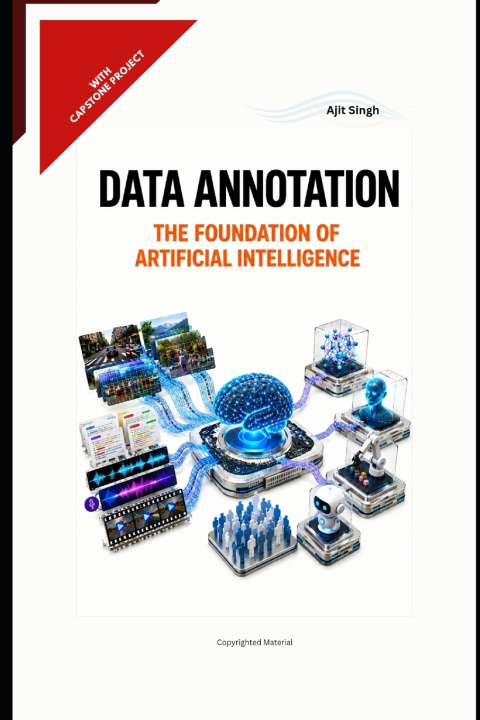
The core philosophy of "Data Annotation: The Foundation of Artificial Intelligence" is rooted in the "Data-Centric AI" paradigm. For years, the AI industry has been obsessed with algorithms, often treating data as a secondary, static resource. This book reverses that narrative. I rely upon the principle that the quality, structure, and architecture of annotated data dictate the success of any AI application. Furthermore, the philosophy of this book is strictly anti-fluff and anti-theoretical. We believe that technologists learn best by doing. Therefore, the text heavily emphasizes the implementation of practical applications. Instead of asking "What is AI?", this book asks "How do we build the data engines that make AI work, and how do we deploy them in the real world?"
Key Features
1. Comprehensive Lifecycle Coverage: The book covers the entire spectrum from scratch to design, build, setup, deployment, and final production.
2. Hands-on Practicals and Case Studies: Every chapter features practical implementations, ensuring readers understand the "how-to" aspect of developing apps and solutions.
3. Simple yet Scalable: Algorithms are presented simply, but the architectural designs and cloud deployment strategies are enterprise-ready and future-proof.
4. A Complete Capstone Project: Unlike books that leave you hanging with snippets of code, Chapter 10 provides a complete, working, live Do-It-Yourself (DIY) project with full code, step-by-step instructions, and deployment strategies.
5. Holistic Component Analysis: Wherever applicable, the text breaks down models, architectures, frameworks, services, components, functioning, advantages, disadvantages, and future scope.
Key Takeaways
Upon completing this book, readers will possess the ability to:
1. Understand the exact history, evolution, classification, and necessity of data annotation in the modern AI ecosystem.
2. Design and set up robust, scalable data annotation infrastructures and user interfaces from scratch.
3. Implement practical annotation solutions for various data types, including Natural Language Processing (NLP), Computer Vision (CV), and sensor data.
4. Utilize automated, semi-automated, and active learning frameworks to reduce manual labeling time and costs.
5. Establish rigorous Quality Assurance (QA) metrics and data security protocols to ensure enterprise-grade dataset reliability.
6. Deploy annotation services into cloud environments, managing both the technical architecture and the human-in-the-loop workforce.
6. Build, code, and deploy a complete, working AI application starting from raw data annotation all the way to final production, as demonstrated in the Capstone project.
Disclaimer: Earnest request from the Author.
Kindly go through the table of contents and refer kindle edition for a glance on the related contents.
Thank you for your kind consideration!


Informationen zum Buch
Englisch

Verschenken Sie dieses Buch noch heute
Es ist ganz einfach
1 Legen Sie das Buch in Ihren Warenkorb und wählen Sie den Versand als Geschenk 2 Wir schicken Ihnen umgehend einen Gutschein 3 Das Buch wird an die Adresse des beschenkten Empfängers geliefertHallo! Ich bin Libroamiko, dein Buchberater.
Wie kann ich dir helfen?