
 Kontakt
 Wie einkaufen

Versand
Kaufberater
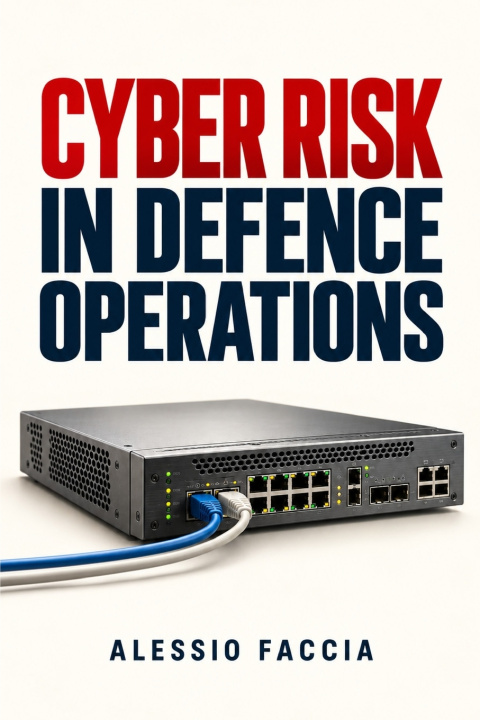
CYBER RISK IN DEFENCE OPERATIONS
Strategy, Governance and Operational Control in Contested Digital Environments
 Englisch
 90 b
Bis zu 30 Tage Rückgaberecht

Cyber warfare now reaches every level of military activity. Defence ministries, armed forces, intelligence organisations and military contractors depend on networks, software, cloud services, satellites, autonomous platforms and data-driven command systems. A compromised identity, supplier update or communications link might disrupt a mission, expose operational plans or corrupt information on which commanders rely.
Cyber Risk in Defence Operations presents a structured framework for managing digital threats across strategic, operational and tactical levels. Alessio Faccia connects cybersecurity with mission assurance, command responsibility, military readiness, governance and capability planning. The book examines how technical weaknesses and cyber incidents affect operational freedom, force protection, logistics, intelligence, weapons availability and national security.
Readers will examine:
• Cyber threats across strategic, operational and tactical levels
• Defence networks, digital assets and operational dependencies
• State actors, criminal groups, insiders and proxy organisations
• Cyber risk identification, assessment, ownership and prioritisation
• Command, control, communications, computers and intelligence systems
• Weapons platforms, sensors, drones and autonomous systems
• Defence contractors, software suppliers and third-party exposure
• Cloud services, data centres, remote access and legacy technology
• Zero-trust architecture, security monitoring and threat intelligence
• Incident detection, containment, recovery and evidence preservation
• Cyber exercises, red teaming and readiness testing
• Continuity during cyberattack, communications loss and data compromise
• Governance, rules of engagement and personnel security
• Artificial intelligence and automated cyber operations
• International law, allied cooperation and cross-border incidents
• Scenario planning and future defence priorities
Detailed discussion links technical controls with military missions. Asset inventories, dependency maps, intelligence and scenario analysis help leaders identify where compromise would cause the greatest operational harm. Governance arrangements assign responsibility to commanders, system owners, security teams, intelligence personnel, legal advisers and suppliers. Risk-based prioritisation directs resources towards services which support priority missions.
The book also examines resilience after hostile access. Defence organisations need monitoring, containment authority, protected backups, trusted recovery procedures and alternative methods for command and communication. Exercises provide evidence about personnel, processes and technology under realistic pressure. Red teams reveal weaknesses which routine compliance reviews often miss.
Emerging technologies receive focused attention. Artificial intelligence supports detection, analysis and response, and it introduces concerns involving data quality, model manipulation, automated authority and supplier dependence. Autonomous platforms create additional risks through navigation, sensing and remote control. Quantum computing, space systems, cloud concentration and software supply chains also shape future investment.
International and allied dimensions remain central. Cyber incidents frequently cross borders, involve private infrastructure and require cooperation among armed forces, intelligence services, police, regulators and commercial providers. Legal analysis addresses sovereignty, state responsibility, self-defence, international humanitarian law and civilian protection.


Informationen zum Buch
Englisch

Verschenken Sie dieses Buch noch heute
Es ist ganz einfach
1 Legen Sie das Buch in Ihren Warenkorb und wählen Sie den Versand als Geschenk 2 Wir schicken Ihnen umgehend einen Gutschein 3 Das Buch wird an die Adresse des beschenkten Empfängers geliefertHallo! Ich bin Libroamiko, dein Buchberater.
Wie kann ich dir helfen?