
 Kontakt
 Wie einkaufen
Versand
Kaufberater
 Englisch
 90 b
90 b
Bis zu 30 Tage Rückgaberecht
Kunden kauften auch







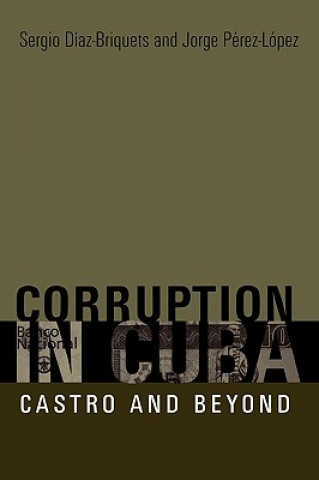
While Fidel Castro maintains his longtime grip on Cuba, revolutionary scholars and policy analysts have turned their attention from how Castro succeeded (and failed), to how Castro himself will be succeeded - by a new government. Among the many questions to be answered is how the new government will deal with the corruption that has become endemic in Cuba. Even though combating corruption cannot be the central aim of post-Castro policy, Sergio Diaz-Briquets and Jorge Perez-Lopez suggest that, without a strong plan to thwart it, corruption will undermine the new economy, erode support for the new government, and encourage organized crime. In short, unless measures are taken to stem corruption, the new Cuba could be as messy as the old Cuba. Fidel Castro did not bring corruption to Cuba; he merely institutionalized it. Official corruption has crippled Cuba since the colonial period, but Castro's state-run monopolies, cronyism, and lack of accountability have made Cuba one of the world's most corrupt states. The former communist countries in Eastern Europe were also extremely corrupt, and analyses of their transitional periods suggest that those who have taken measures to control corruption have had more successful transitions, regardless of whether the leadership tilted toward socialism or democracy. To that end, Diaz-Briquets and Perez-Lopez, both Cuban Americans, do not advocate any particular system for Cuba's next government, but instead prescribe uniquely Cuban policies to minimize corruption whatever direction the country takes after Castro. As their work makes clear, averting corruption may be the most critical obstacle in creating a healthy new Cuba.


Informationen zum Buch
Englisch

Verschenken Sie dieses Buch noch heute
Es ist ganz einfach
1 Legen Sie das Buch in Ihren Warenkorb und wählen Sie den Versand als Geschenk 2 Wir schicken Ihnen umgehend einen Gutschein 3 Das Buch wird an die Adresse des beschenkten Empfängers geliefertDas könnte Sie auch interessieren





Hallo! Ich bin Libroamiko, dein Buchberater.
Wie kann ich dir helfen?