
 Kontakt
 Wie einkaufen

Versand
Kaufberater
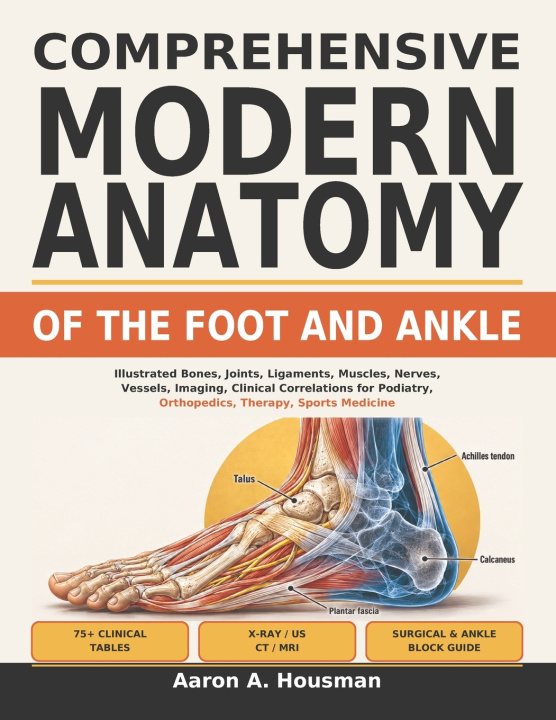
Comprehensive Modern Anatomy of the Foot and Ankle
Illustrated Bones, Joints, Ligaments, Muscles, Nerves, Vessels, Imaging, Clinical Correlations for Podiatry, Orthopedics, Therapy, Sports Medicine
 Englisch
 313 b
 Neu
Bis zu 30 Tage Rückgaberecht

Trademark disclaimer:
All trademarks, service marks, registered trademarks, and organization names mentioned in this book are the property of their respective owners. Any references are used solely for identification and educational purposes and do not imply affiliation, sponsorship, authorization, or endorsement by their owners.Educational notice: This book is intended for educational purposes and does not replace supervised professional training, current clinical guidance, or qualified clinical judgment. Illustrations include AI-generated anatomical teaching models and imaging facsimiles.
Every step tells an anatomical story. Learn to understand the structures behind it.
A painful heel. An unstable ankle. Numbness across the sole. Behind each presentation lies a network of bones, joints, tendons, nerves, and vessels-and understanding how they work together can transform the way you learn and reason. Comprehensive Modern Anatomy of the Foot and Ankle brings this intricate region into focus through a structured, illustrated exploration of anatomy, movement, imaging, and clinical relationships. For students facing a demanding subject and professionals revisiting essential foundations, the challenge often lies in connecting what you know. This book helps you build those connections: from a structure's location to its function, from its attachments to its movement, and from its anatomical relationships to the symptoms that make it clinically relevant.
Across 15 integrated chapters, you will explore:
Bones and anatomical landmarks: Navigate the hindfoot, midfoot, forefoot, and distal leg, including development, ossification, and anatomical variations.
Joints and stabilizing structures: Understand the ankle mortise, syndesmosis, subtalar and midfoot joints, plantar plates, and ligament complexes.
Muscles, tendons, and soft tissues: Connect extrinsic and intrinsic muscle anatomy with tendon function, plantar fascia, heel-pad structure, and fascial compartments.
Nerves and circulation: Trace nerve pathways, sensory territories, entrapment sites, arterial supply, venous drainage, and lymphatic anatomy.
Surface anatomy and examination: Relate deeper structures to palpable landmarks, movement assessment, and clinical examination.
Imaging anatomy: Explore anatomical relationships through radiographic, ultrasound, CT, and MRI teaching depictions.
Biomechanics and gait: Understand how arches, joint axes, plantar loading, and coordinated movement support the transition from impact absorption to propulsion.
Surgical and regional anesthesia anatomy: Study anatomical approaches, vulnerable structures, regional relationships, and clinically important variations.
SWAP AND BUY NOW; Add Comprehensive Modern Anatomy of the Foot and Ankle to your study collection and build a deeper understanding of structure, function, and clinical relevance.


Informationen zum Buch
Englisch

Verschenken Sie dieses Buch noch heute
Es ist ganz einfach
1 Legen Sie das Buch in Ihren Warenkorb und wählen Sie den Versand als Geschenk 2 Wir schicken Ihnen umgehend einen Gutschein 3 Das Buch wird an die Adresse des beschenkten Empfängers geliefertHallo! Ich bin Libroamiko, dein Buchberater.
Wie kann ich dir helfen?