
 Kontakt
 Wie einkaufen
Versand
Kaufberater
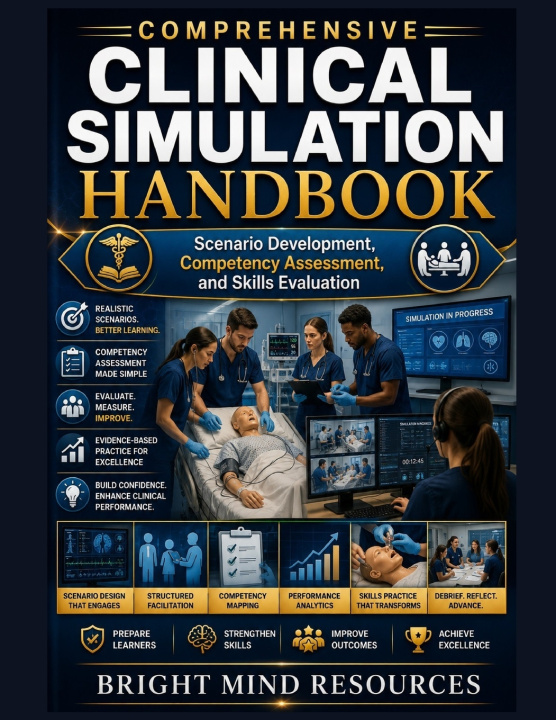
COMPREHENSIVE CLINICAL SIMULATION HANDBOOK
Scenario Development, Competency Assessment, and Skills Evaluation
 Englisch
 369 b
369 b
 Demnächst
 Neu
Neu
Bis zu 30 Tage Rückgaberecht

**COMPREHENSIVE CLINICAL SIMULATION HANDBOOK**
Clinical simulation has become an important part of healthcare education because it allows learners to develop knowledge, clinical judgment, communication, teamwork, technical skills, and decision-making in structured learning environments.
But effective simulation requires much more than placing a learner in front of a patient manikin.
A meaningful simulation begins with clear learning objectives, realistic scenarios, appropriate preparation, structured facilitation, objective assessment, thoughtful feedback, and effective debriefing.
**Comprehensive Clinical Simulation Handbook** provides a structured reference to the major principles involved in designing, delivering, assessing, and improving clinical simulation experiences.
The book focuses on the connection between **scenario development, competency assessment, and skills evaluation**, helping readers understand how simulation can be transformed from an activity into a purposeful educational experience.
Inside, readers can explore important areas including:
• Foundations of clinical simulation
• Simulation-based education
• Learning objectives and competency alignment
• Scenario planning and development
• Case design and patient profiles
• Simulation environment preparation
• Equipment and technology considerations
• Manikin-based simulation
• Standardized patient activities
• Skills laboratory instruction
• High-fidelity and low-fidelity simulation
• Prebriefing and learner preparation
• Simulation facilitation
• Clinical decision-making scenarios
• Communication and teamwork simulation
• Patient safety simulation
• Emergency and critical-care scenarios
• Competency assessment
• Skills checklists and evaluation tools
• Performance criteria
• Objective assessment methods
• Formative and summative evaluation
• Feedback and coaching
• Structured debriefing
• Reflective learning
• Performance improvement
• Documentation and reporting
• Faculty development
• Simulation program quality improvement
A central theme of the book is **alignment**.
A well-designed simulation should connect the learner's objectives with the scenario, the expected behaviors, the assessment criteria, the feedback process, and the desired clinical outcomes.
When these elements work together, simulation becomes more than practice. It becomes a structured method for developing competence and identifying areas that require additional learning.
The handbook is designed to support readers who need to understand both the educational and operational sides of clinical simulation.
For students and healthcare learners, it provides a framework for understanding what is expected during simulation activities and how performance may be evaluated .


Informationen zum Buch
Englisch
