
 Kontakt
 Wie einkaufen
Versand
Kaufberater
 Englisch
 289 b
289 b
Bis zu 30 Tage Rückgaberecht
Kunden kauften auch




 /
/
 Broschur
 42.89
€
42.89
€

 /
Broschur
17.95
€
/
Broschur
17.95
€

 /
Broschur
10.49
€
/
Broschur
10.49
€


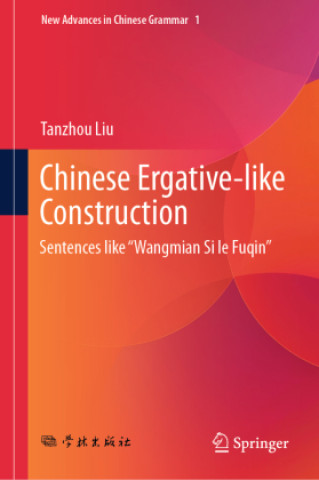
This book first introduces the ins and outs of the debate between generative grammar and construction grammar in the context of modern linguistic theory and introduces various related terms, such as unergative verbs, unaccusative verbs, and "Burzio's law". Secondly, authors discuss the following questions: 1) Is "Wang Mian's father died" derived from "Wang Mian's father died" through the displacement of "Wang Mian"? Do the two belong to the same sentence structure? 2) Is "Wang Mian's father died" derived from "Wang Mian experienced his father's death" through the displacement of "death"? Do the two belong to the same sentence structure? 3) Do "Wang Mian, his father is dead" and "Wang Mian, his father is dead" belong to the same sentence structure? Is there any shift and derivation relationship? Can "father" in both sentences be designated as the subject case? 4) What is the difference in the meaning of sentence patterns when "non-ergative verbs" represented by "disease" and "laugh" and "non-accusative verbs" represented by "die" and "come" take objects? 5) How do you view the relationship between the historical formation of "Wang Mian's father died" and the "generation" hypothesis in the synchronic system? Finally, authors discuss the explanatory power of the construction method and the syntactic shift method and which of the argument view and topic view of Chinese syntax can better reflect the essence of Chinese grammar.


Informationen zum Buch
Englisch

Verschenken Sie dieses Buch noch heute
Es ist ganz einfach
1 Legen Sie das Buch in Ihren Warenkorb und wählen Sie den Versand als Geschenk 2 Wir schicken Ihnen umgehend einen Gutschein 3 Das Buch wird an die Adresse des beschenkten Empfängers geliefertDas könnte Sie auch interessieren








Hallo! Ich bin Libroamiko, dein Buchberater.
Wie kann ich dir helfen?