
 Kontakt
 Wie einkaufen
Versand
Kaufberater
 Englisch
 68 b
68 b
 Neu
Neu
Bis zu 30 Tage Rückgaberecht

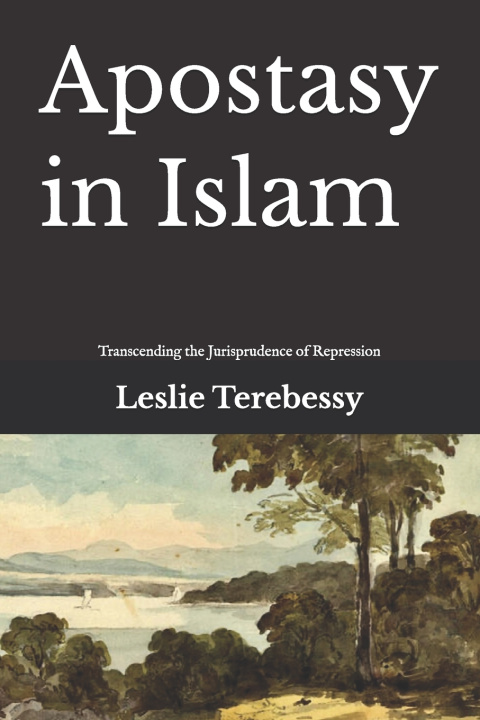
The empires of the crescent were ended by wars of aggression. Hawkish rulers waged wars of aggression to enlarge the empire. But aggression is prohibited in the Book of Allah. To bypass the prohibition of aggression in revelation, rulers enlisted suitable jurists to articulate a "religious" justification of wars of aggression. Responding to their rulers, hawkish jurists reinterpreted the Book of Allah as a teaching of war. They did it by weaponizing exegesis and jurisprudence. The weaponization of the epistemology of revelation entailed recourse to perceptions contrary to the teaching of revelation. The ulama justified wars of aggression, known as jihad al-talab, by "abrogating" all verses in revelation that advise reconciliation, patience and mercy. The weaponization of the epistemology of revelation was expedited by recourse to the abrogation of the verses of reconciliation by the verse of the sword. The "abrogation" of the verses of reconciliation transformed Islam into a religion of war. The weaponization of the epistemology of revelation was buttressed by recourse to traditions, treated as revelation, for example the tradition that endorses the death penalty for apostasy. The ulama also referred to traditions where the prophet reportedly stated that "the blood of the kafir is halal for the believer." Weaponization required a turn from revelation to tradition, the treatment of tradition as revelation, the repression of rationality, "judging" revelation by tradition, and the abrogation of all verses of reconciliation by the verse of the sword. The turn to tradition was justified by the assertion that tradition, too is "revelation" and that revelation requires "clarification" and "detailing" by tradition. The assertions that revelation requires assistance from tradition required besmirching revelation, by alleging that revelation is in parts "unclear" and "insufficiently detailed." But the characterizations of revelation as "unclear" and "insufficiently detailed" portray the Book as less the perfect and cast doubt on its inimitability. A further allegation regarding revelation is the assertion that revelation features "contradictions." This would be resolved by recourse to the teaching of abrogation. They treat the Book as a product of a person that was "unclear," "forgetful" and "confused." This reflects anthropomorphism. Propelled by the authoritarianism, justified by misinterpretation of revelation, hawkish rulers embarked on a warpath against the rest of the world. They saw the world as a war between the dar al-Islam and the dar al-harb, a version of the "clash of civilizations" narrative. The justification of wars of aggression entailed a perpetration of errors. These errors encroach upon tawhid. The first error was the turn from revelation to tradition, reflected in the recording of the traditions. The second error was the repression of reason. Authoritarianism emerged in the form of the repression of freedom and the repression of reason. Repression enabled the third error, the treatment of tradition as "revelation from God." The treatment of tradition as "revelation from God" prepared the perpetration of the fourth error, treating tradition as a "judge" of revelation. This furnished a "justification" for treating tradition as a root of legislation. But the right to legislate in Islam belongs to Allah alone. The fifth error was recourse to the teaching of abrogation. The "abrogation" of the verses of reconciliation enabled the transformation of the religion of reconciliation into a religion of war. This prepared the way for the sixth error, the treatment of jihad al-talab or aggressive jihad as a sixth pillar of Islam. With these errors, the transformation of Islam into Islamism was complete. Islam would no longer be a way of reconciliation but a teaching of war. These errors drew Muslims into wars of aggression, resulting in defeats on the battlefields. For revelation is clear: "Allah does not love aggressors."


Informationen zum Buch
Englisch

Verschenken Sie dieses Buch noch heute
Es ist ganz einfach
1 Legen Sie das Buch in Ihren Warenkorb und wählen Sie den Versand als Geschenk 2 Wir schicken Ihnen umgehend einen Gutschein 3 Das Buch wird an die Adresse des beschenkten Empfängers geliefertHallo! Ich bin Libroamiko, dein Buchberater.
Wie kann ich dir helfen?