
 Kontakt
 Wie einkaufen
Versand
Kaufberater
 Englisch
 167 b
167 b
Bis zu 30 Tage Rückgaberecht
Kunden kauften auch

 /
/
 Broschur
 34.29
€
34.29
€









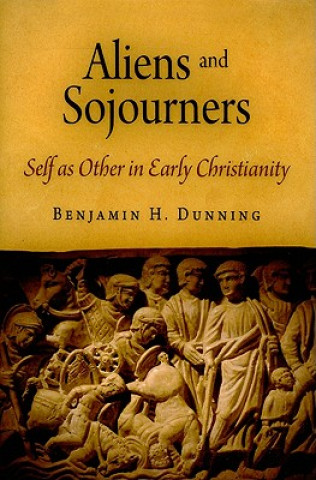
Early Christians spoke about themselves as resident aliens, strangers, and sojourners, asserting that otherness is a fundamental part of being Christian. But why did they do so and to what ends? How did Christians' claims to foreign status situate them with respect to each other and to the larger Roman world as the new movement grew and struggled to make sense of its own boundaries? Aliens and Sojourners argues that the claim to alien status is not a transparent one. Instead, Benjamin Dunning contends, it shaped a rich, pervasive, variegated discourse of identity in early Christianity. Resident aliens and foreigners had long occupied a conflicted space of both repulsion and desire in ancient thinking. Dunning demonstrates how Christians and others in antiquity capitalized on this tension, refiguring the resident alien as being of a compelling doubleness, simultaneously marginal and potent. Early Christians, he argues, used this refiguration to render Christian identity legible, distinct, and even desirable among the vast range of social and religious identities and practices that proliferated in the ancient Mediterranean. Through close readings of ancient Christian texts such as Hebrews, 1 Peter, the Shepherd of Hermas, and the Epistle to Diognetus, Dunning examines the markedly different ways that Christians used the language of their own marginality, articulating a range of options for what it means to be Christian in relation to the Roman social order. His conclusions have implications not only for the study of late antiquity but also for understanding the rhetorics of religious alienation more broadly, both in the ancient world and today.


Informationen zum Buch
Englisch

Verschenken Sie dieses Buch noch heute
Es ist ganz einfach
1 Legen Sie das Buch in Ihren Warenkorb und wählen Sie den Versand als Geschenk 2 Wir schicken Ihnen umgehend einen Gutschein 3 Das Buch wird an die Adresse des beschenkten Empfängers geliefertDas könnte Sie auch interessieren

 /
Broschur
14.89
€
/
Broschur
14.89
€























Hallo! Ich bin Libroamiko, dein Buchberater.
Wie kann ich dir helfen?